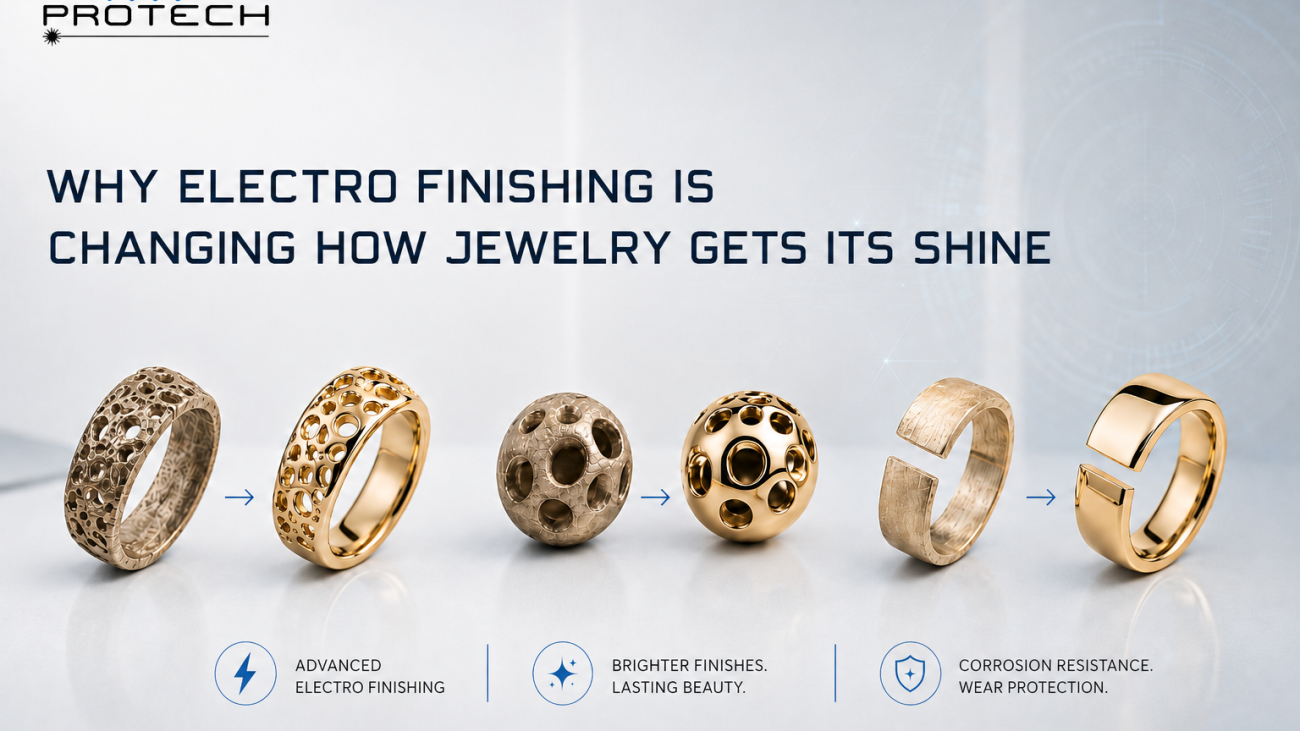
Why Electro Finishing Is Changing How Jewelry Gets Its Shine

Why Electro Finishing Is Changing How Jewellery Gets Its Shine

Every jewelry workshop knows the bottleneck. A batch of casted pieces sits waiting while one or two skilled polishers work through them by hand wheel by wheel, ring by ring. It is slow, inconsistent and expensive. Trained polishers are hard to find and their output varies from person to person, day to day. For many workshops, the polishing bench is the single biggest constraint on how much they can produce.

There is now a better way, and it is called Electro Finishing.

What Electro Finishing Actually Is

Electro Finishing, often called electropolishing, is an electrochemical process. The piece of jewelry is submerged in a special electrolyte liquid and connected to an electrical current. The current causes microscopic peaks and roughness on the metal surface to dissolve away selectively, leaving behind a smooth surface, uniformly bright surface.

Unlike grinding or abrasive polishing, nothing physically touches the metal. There is no wheel, no compound, no pressure. The process works from the inside out reaching into areas that a polishing wheel physically cannot, including inner contours, filigree details, gemstone settings and the underside of rings.

The result is a metallically pure surface with no micro-scratches, improved corrosion resistance and a high-gloss finish that is consistent across every single piece in the batch.

The Problem with Doing It by Hand

Manual polishing is a skilled trade and that is precisely why it creates problems at scale. A polishing wheel removes metal aggressively. In the hands of a less experienced operator, edges get rounded, fine details get flattened and delicate prongs around gemstones get deformed or weakened. Even experienced polishers produce slightly different results depending on pressure, angle, and fatigue.

Every pass of the wheel removes precious metal. On a gold piece, that lost material disappears into the polishing compound and the air as fine dust and much of it is never recovered. In a workshop doing high volume, this adds up to loss every month.

Hand polishing also cannot reach everywhere. Interior channels, textured surfaces and complex cast geometries require filing and hand tools that take far longer per piece and still often produce an uneven finish. The areas no hand tool can reach simply stay dull.

What Changes with Electro Finishing

OTEC’s EF series machines available in models from compact desktop units suited to small workshops all the way to production-scale systems replace up to 90% of manual pre-polishing and filing work. A full cycle takes between 10 and 30 minutes, processing multiple pieces simultaneously. The EF-One, for example, handles up to 6 rings per cycle. The EF-Flex processes up to 40 workpieces per container.

Critically, the process is safe for gemstone settings. Diamonds, zirconia and other stones are not damaged. The geometry of the piece is preserved exactly only the surface roughness is removed.

The electrolyte used in modern EF machines is cyanide-free and requires no aggressive acids and the working environment is significantly safer than traditional chemical finishing methods. Recovered gold particles are captured in the liquid through filtration and separated at the cathodes meaning your precious metal loss drops substantially compared to wheel polishing.

Who It Is For

Electro Finishing is not only for large factories. The OTEC EF-One was specifically designed as a plug-and-play entry point for small and medium workshops, with eight pre-installed programs that require no specialist knowledge to operate.

For workshops producing consistent batches whether rings, pendants, bracelets or clasps the economics are straightforward. Less labor time per piece, more consistent output, lower metal loss and a great finish quality on complex geometries.

The Takeaway

The polishing bench is not going away entirely. Skilled finishing work will always have a place for bespoke and repair pieces. But for production batches, Electro Finishing removes the bottleneck, reduces cost and delivers a more consistent result than hand polishing can. The technology has been proven precious metal across gold, silver, stainless steel, titanium and brass and it is now accessible to workshops of every size.

ProTech Transfer Co., Ltd. is the authorised distributor of OTEC finishing machines in Thailand, providing equipment, consumables, and technical support. www.protech-transfer.com
cover2

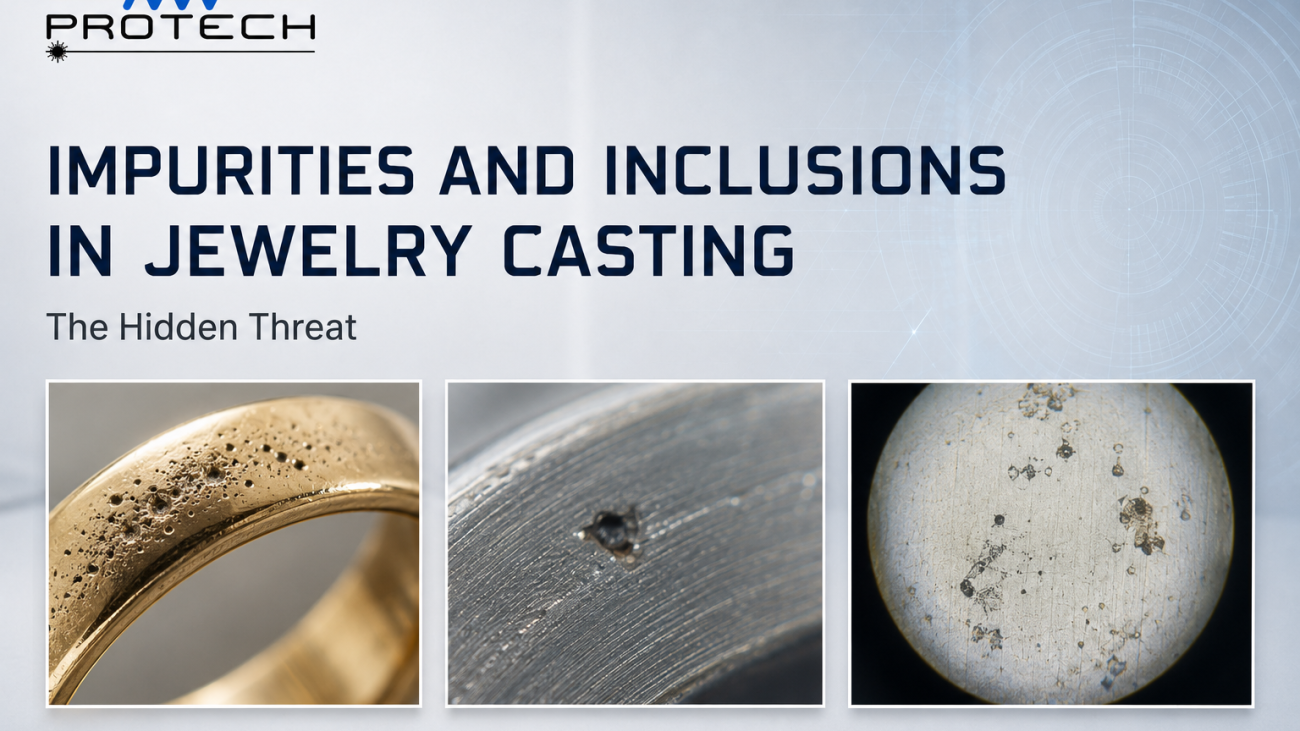
Impurities and Inclusions in Jewelry Casting – The Hidden Threat

Even trace levels of contamination can compromise the structural integrity and surface finish of cast jewelry. Understanding where these impurities originate and how to stop them is fundamental to defect-free production.

The scale of the problem

In jewelry casting, purity is not a luxury, it is a prerequisite. Metals marketed as 99.9% pure still carry up to 0.1% in residual impurities and that margin is enough to cause serious defects. Iron contamination at concentrations as low as 100–200 ppm has been shown to initiate cracking in gold alloys. Lead and sulphide inclusions can strip an alloy of nearly all its mechanical strength.

Iron contamination at just 100 ppm can initiate cracking in gold alloys.

Where contamination enters the process

Contamination has three primary entry points. The first is the raw material itself, where even certified metals carry trace elements from refining. The second and most frequently cited is scrap recycling. Inadequately cleaned returns introduce oxides, investment residues and foreign metallic particles directly into the melt. The third is the casting environment: steel tools, worn crucibles and airborne dust all contribute contamination during melting and pouring.

A taxonomy of defects

The type of defect produced depends largely on what entered the melt and when

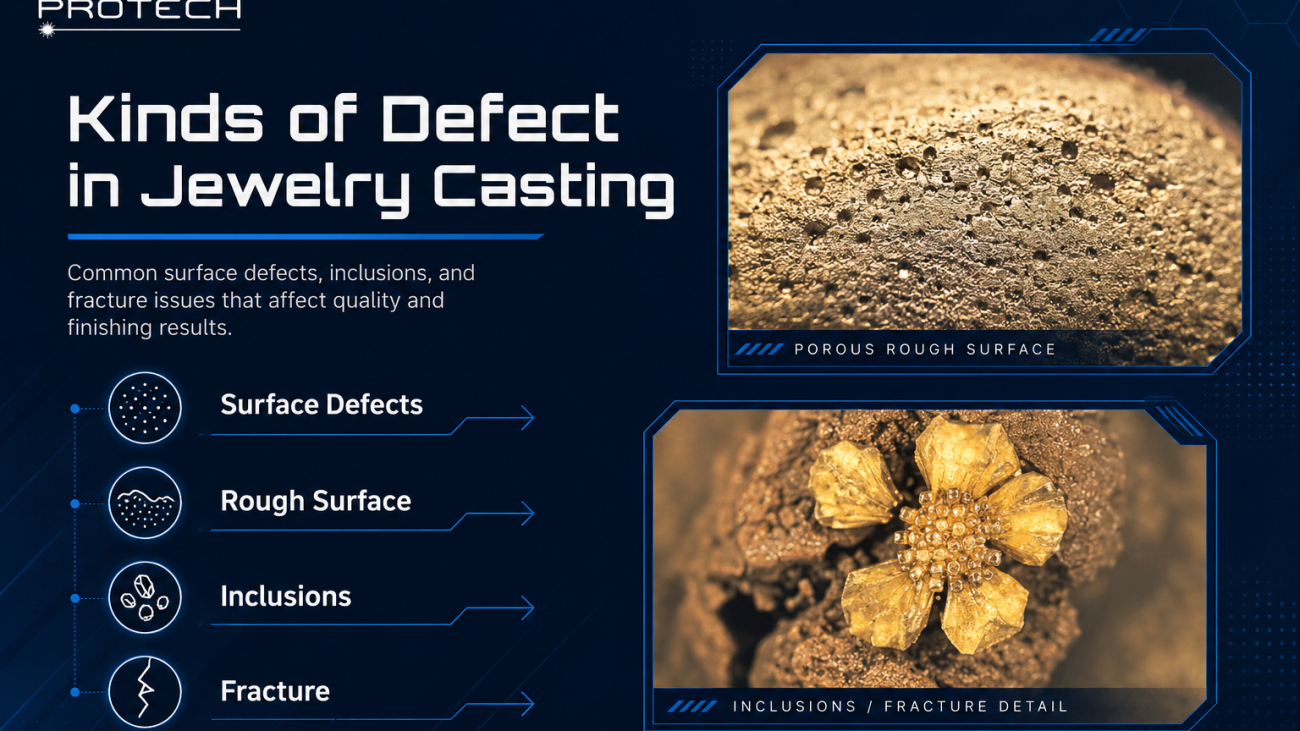
Cracks & brittleness

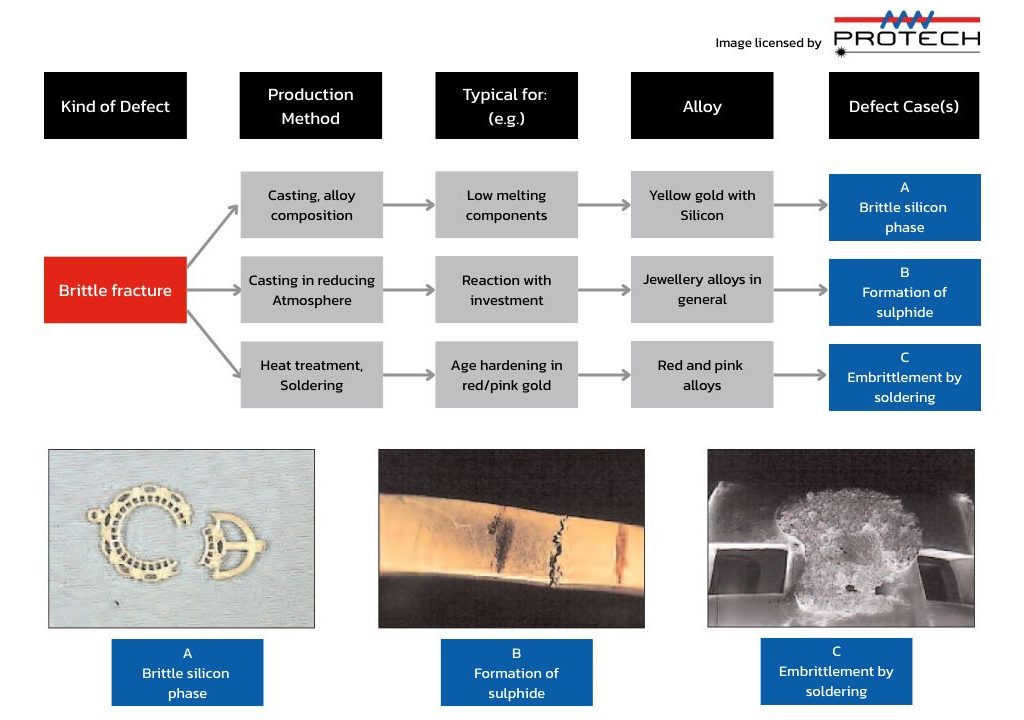
Iron, lead or sulphide inclusions reducing alloy ductility and strength

Surface porosity

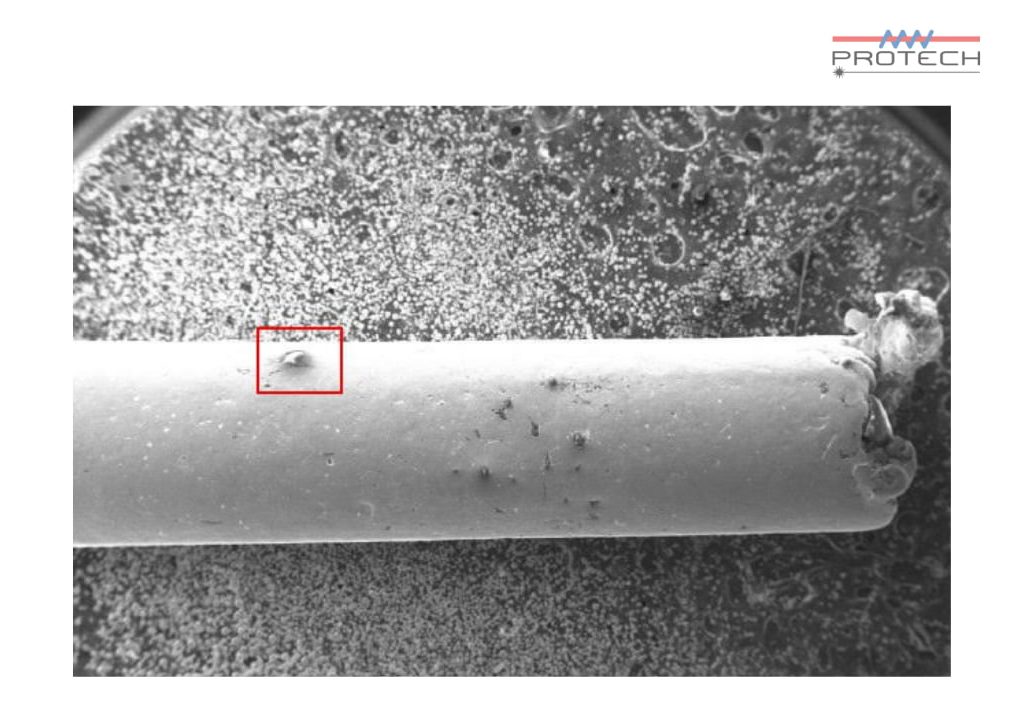
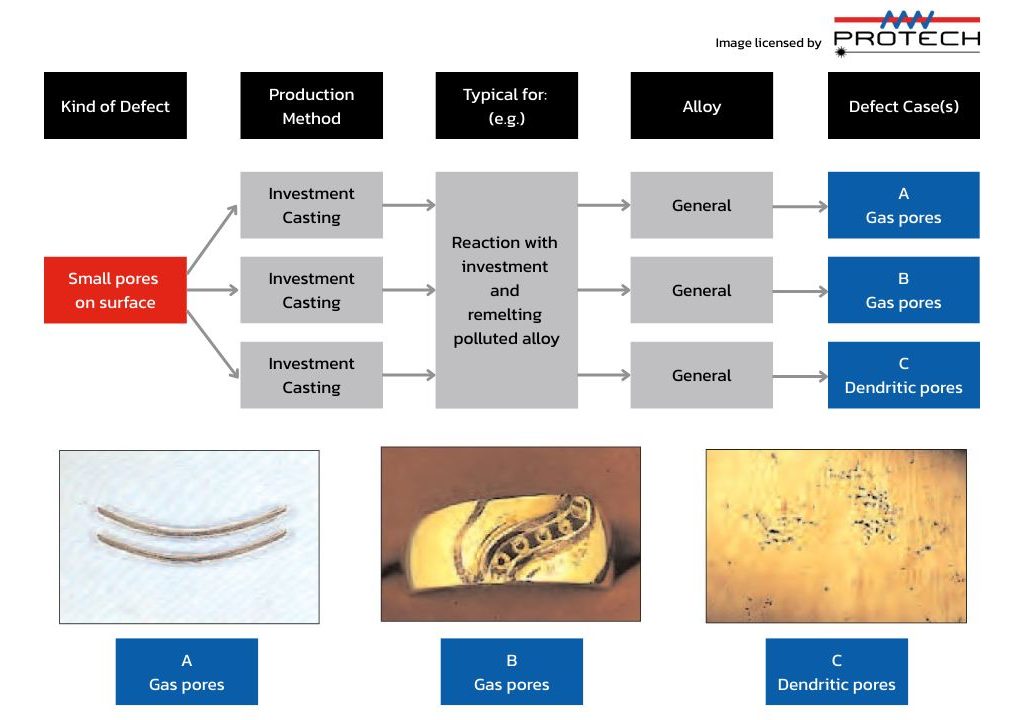
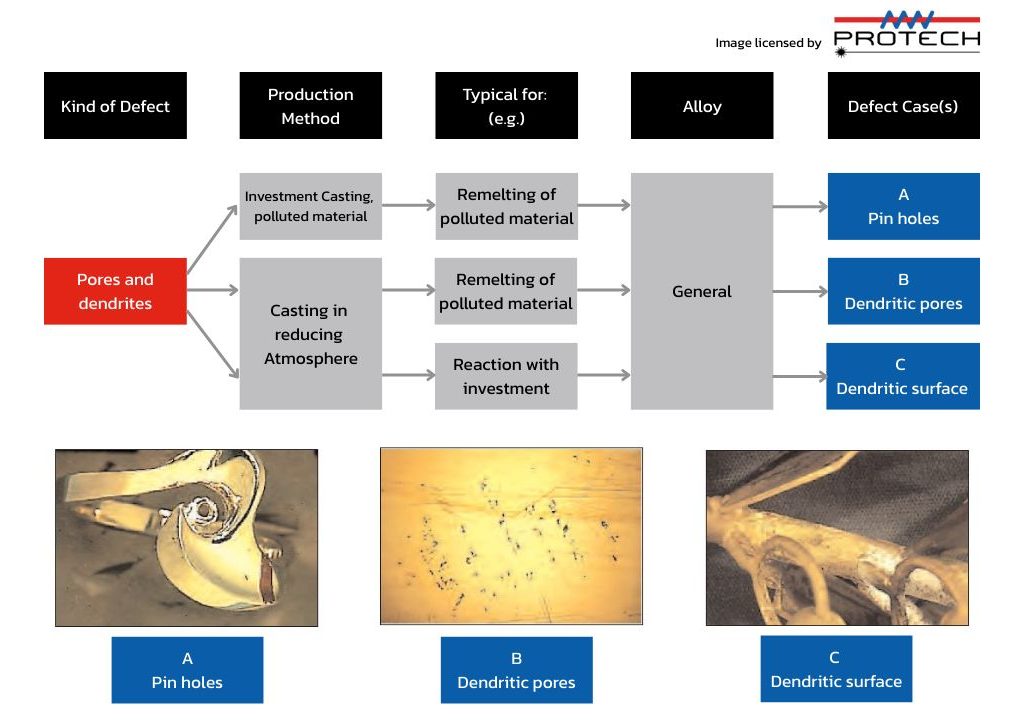
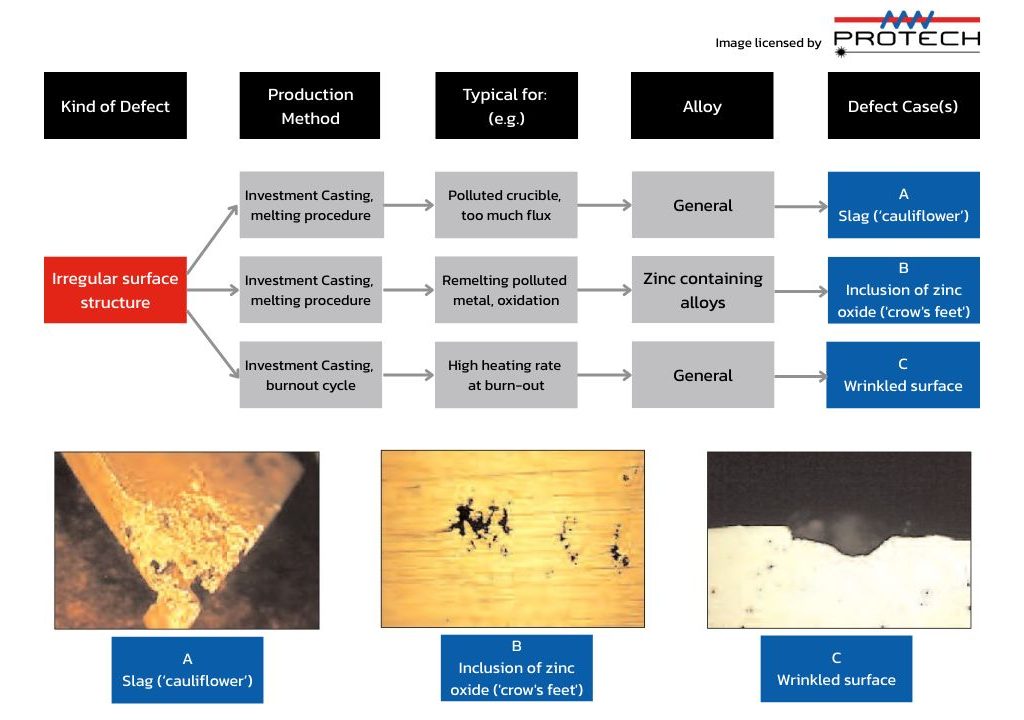
Investment particles or slag entering the melt; visible after polishing as scattered pores

Oxide inclusions

Zinc oxide producing “crow’s foot” porosity is difficult to remove once formed

Slag inclusions

Excess or contaminated flux creating rough, cauliflower-textured surfaces

Hard spots

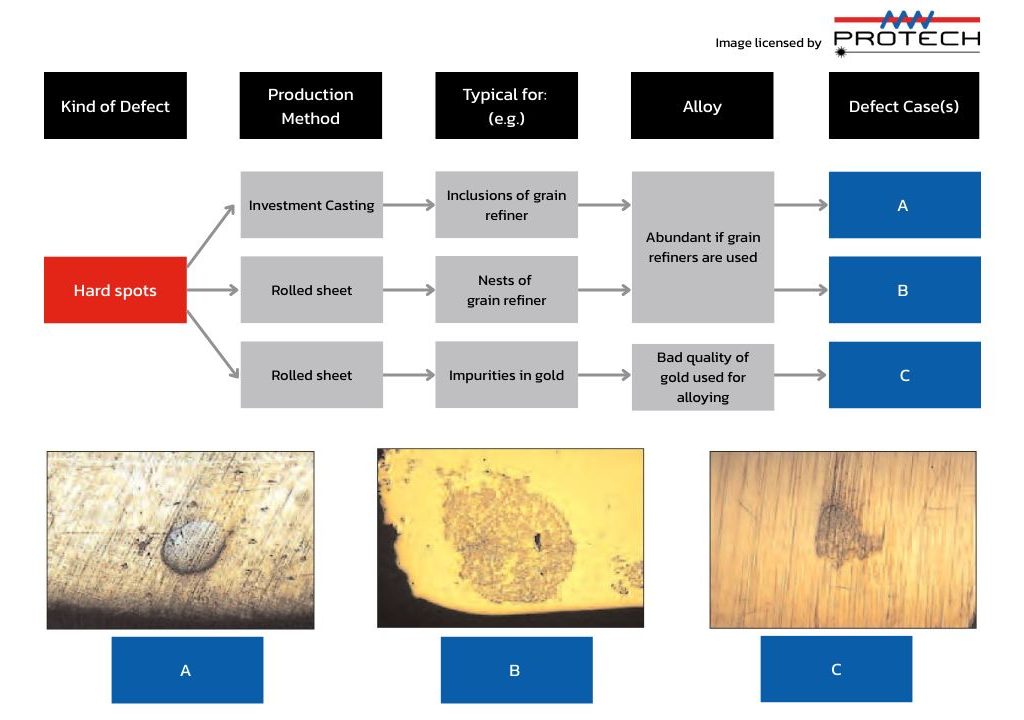
Undissolved grain refiners such as iridium forming particles that resist polishing and cause cracking

Prevention

Control must be applied at every stage of the process, not treated as a final quality check.

  • Source high-quality, certified raw materials and verify composition
  • Keep scrap clean; limit the proportion of recycled content per melt
  • Use dedicated, clean crucibles and replace them before wear introduces contamination
  • Minimise flux additions and eliminate contaminated stock
  • Maintain proper investment mixing, storage and burnout procedures
  • Melt under a protective atmosphere where possible to suppress oxide formation

Conclusion

Impurity control is not a peripheral concern, it sits at the core of casting quality. The consequences of contamination are disproportionate to the quantities involved: a part-per-million problem can become a visible, structural or commercial failure. A disciplined approach to materials selection, scrap management and process hygiene remains the most reliable path to consistent, defect-free output.

cover4 (2)

Precious Metal Recovery from Electro-Polishing

Discover how jewelry manufacturers can recover gold, silver and rhodium from electro-polishing and plating waste using electrolytic metal recovery systems.

Recovering Precious Metals from Electro Polishing Waste: Turning Loss into Value


In jewelry manufacturing, precious metal counts. During electro polishing or plating, the waste liquids can hold significant amounts of valuable metals such as gold, silver, rhodium, etc. Often unknowingly discarded as waste.

Recovering Precious Metal in Liquids


When electro polishing solutions become saturated with dissolved metals or plating baths reach end of life time, they must be replaced. Common practice is to send these liquids to third-party waste treatment and refining.
From Waste to Asset: The Electrolytic Metal Recovery Process.

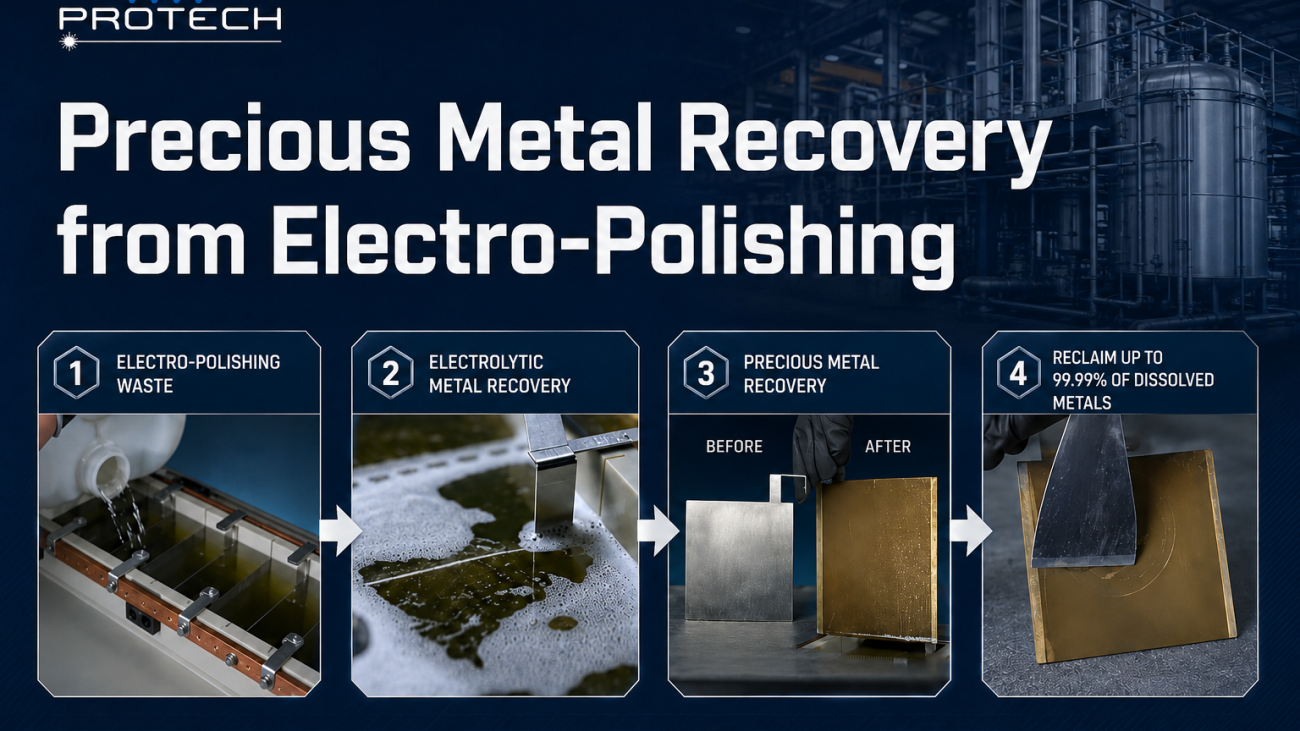
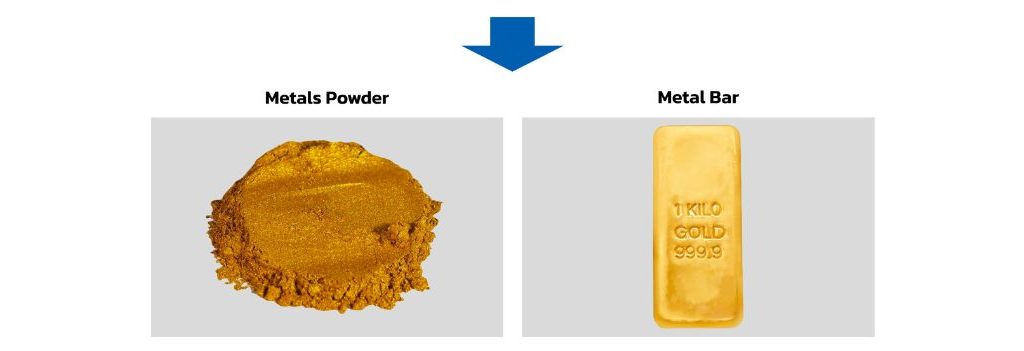
Electrolytic metal recovery systems provide a sustainable and cost-effective way to reclaim precious metals from plating and electro polishing baths. The process uses a controlled electrical current to attract and deposit dissolved metals onto a cathode, forming a metal layer that can be easily scraped off, turning it into metal powder. This recovered metal powder can be melted into metal blocks.

This technology not only minimizes environmental impact but also generates direct financial return transforming waste into a valuable resource.

Real Example: Rhodium Recovery from Polishing Solution


In one test using an electrolytic recovery system, a 5-liter sample of depleted Rhodium plating solution was processed for 36 hours in constant Voltage (CV) mode. The system successfully recovered 1.5 grams of Rhodium, valued at approximately 12,000 THB, with only 96 THB in electrical operating cost.
This example clearly demonstrates how much hidden value remains in spent process solutions especially when dealing with high-value metals like Rhodium. This provides a very high Return of Investment (ROI) value.

Why Jewelry Manufacturers Should Consider Metal Recovery?


Implementing a precious metal recovery system in the electro polishing or plating process allows jewelry manufacturers to:

  • Recover Gold, Silver, Rhodium and other metals directly
  • Reduce waste disposal costs and hazardous waste volume
  • Meet environmental compliance standards with lower discharge limits
  • Improve sustainability through circular production practices
  • Gain measurable ROI from materials already in use

This approach supports both profitability and environmental responsibility in sustainable jewelry manufacturing.

Solution Spotlight: ProClaim Precious Metal Recovery System


For jewelry manufacturers seeking an efficient, closed-loop solution, the ProClaim Precious Metal Recovery System offers advanced electrolytic metal recovery designed to reclaim up to 99.99% of dissolved metals from electro-polishing and plating solutions.
Its closed chamber ensures operator safety with high-purity recovery with minimal maintenance.

By integrating ProClaim into your production line, you can turn waste liabilities into valuable assets achieving cleaner processes and direct cost savings.

Interested to learn more about metal recovery for your polishing process? Contact Protech Transfer to discover how the ProClaim System can be integrated into your workflow.

Explore ProClaim Precious Metal Recovery System
(https://protech-transfer.com/protech/protech-proclaim/)

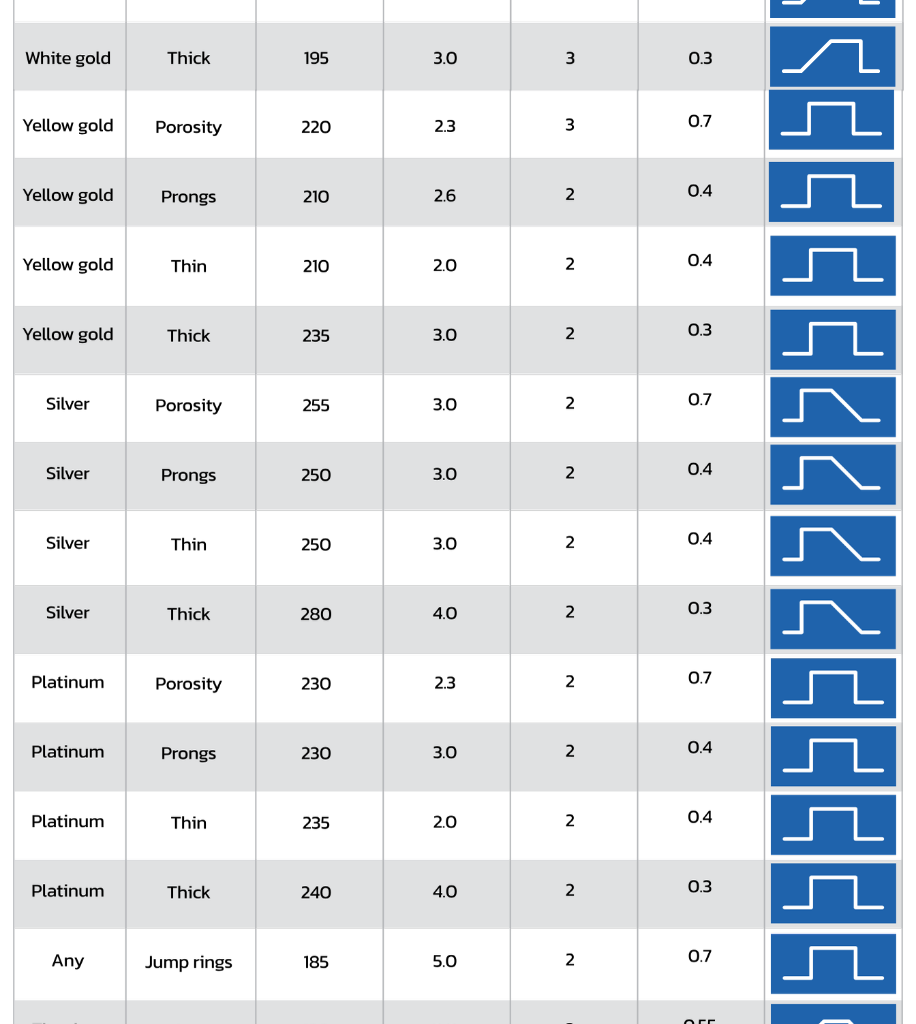
Recommended-Laser-Parameters-for-Different-Metals-and-Applications-2

Laser Welding Pulse Shaping

Laser Welding Pulse Shaping

Square

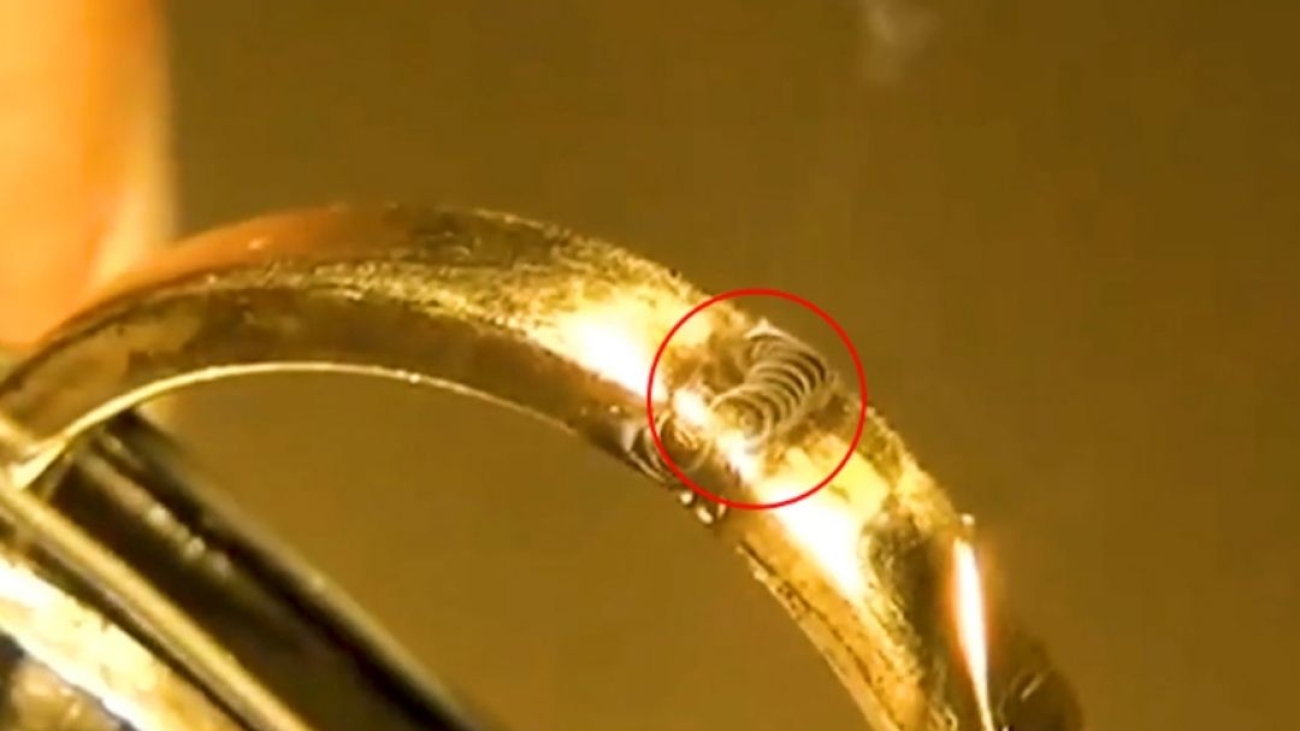
A universal wave form where the set energy is delivered for the set time, ideal for all types of metals.

Slope Up

Using this waveform the first 20% of the set time provides a gradual increase in the energy until it reaches the set value, ideal for highly reflective metals.

Slope Down

Using this waveform the last 20% of the set time provides a gradual decrease to 0, ideal for opaque or poorly reflecting metals.

Trapezoid

This waveform is a combination of the previous two, ideal for silver-rich metals.

Pulsed

Using this waveform the energy is generated as a chain of pulses for greater piercing effect, ideal for all metals.

Diagram-showing-the-influence-of-feeding-design-on-shrinkage-porosity

Shrinkage Porosity in Jewelry Casting

What is Shrinkage Porosity?

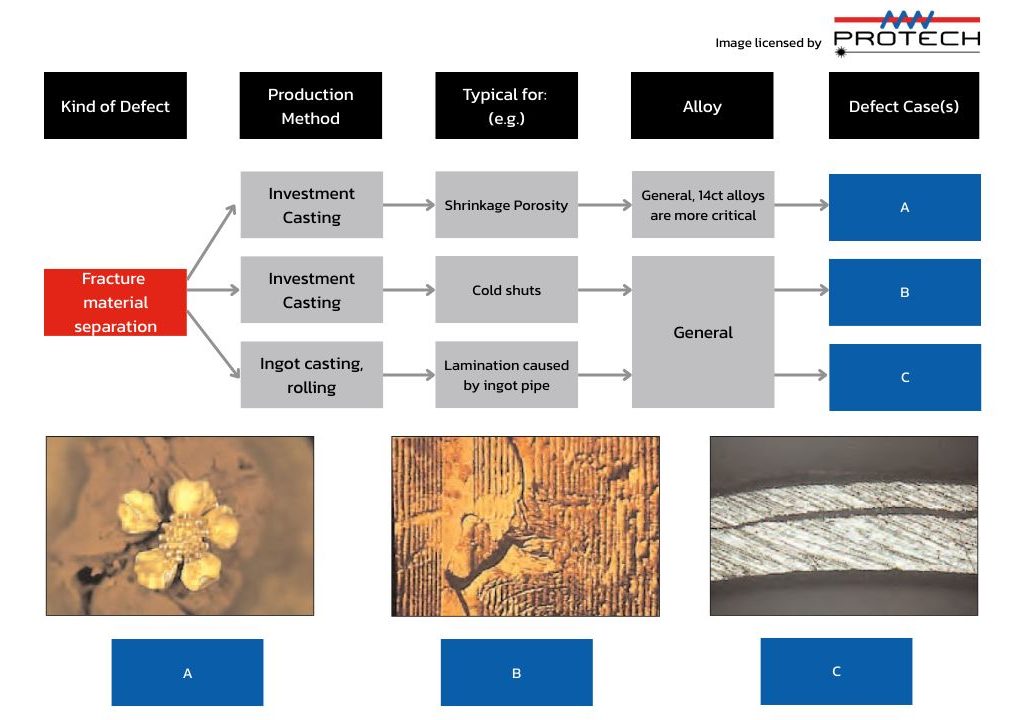
Shrinkage porosity refers to irregular cavities formed in metal as it shrinks while solidifying, that is a common occurrence in jewelry casting. This shrinkage results from a sudden reduction in volume as metals transform from a liquid to a solid state. In different alloys, this shrinkage can range from 4-6% for metals like gold and silver. If not effectively managed, shrinkage porosity leads to visible defects in cast items, like irregular holes and caves.

Formation and Appearance

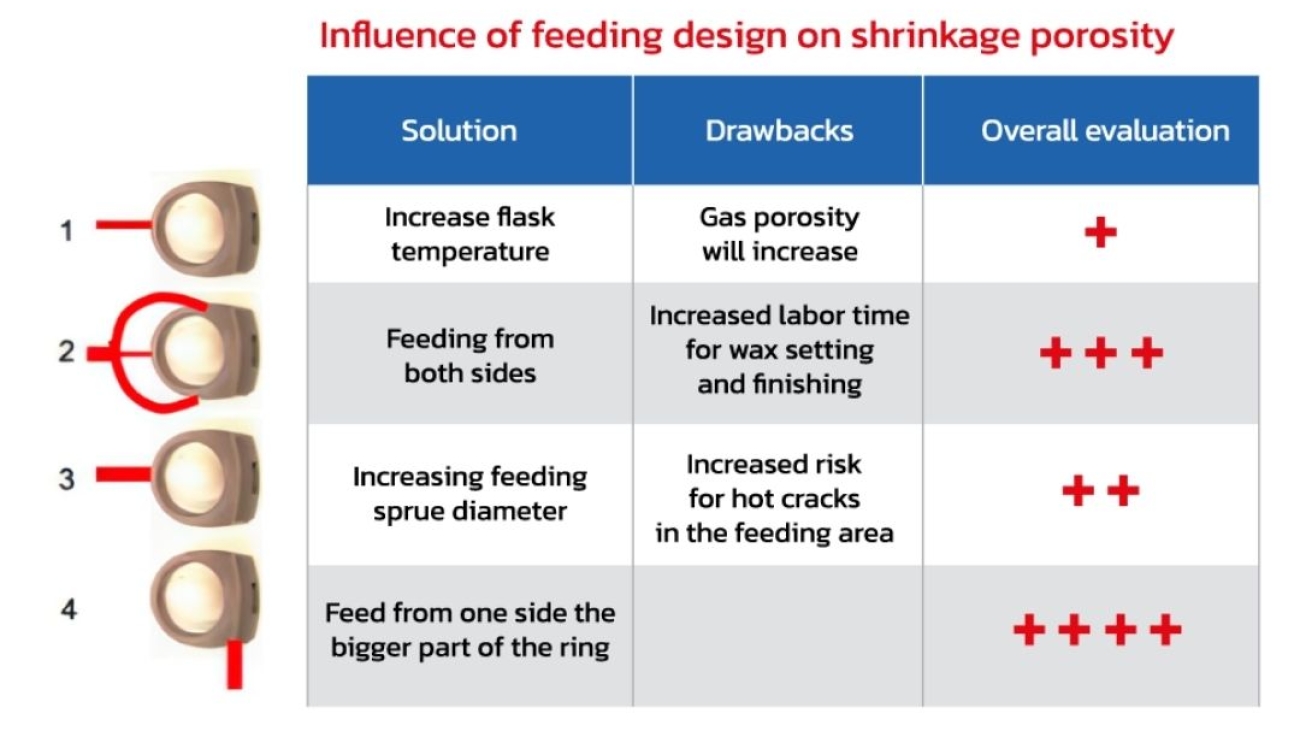
During the solidification process, metal dendrites (branch-like crystals) develop and liquid metal must flow between these branches to compensate for the shrinkage. When this “feeding” process fails, it results in porosity. Certain metals, such as white gold, are more susceptible to shrinkage porosity compared to others like yellow gold or sterling silver. Protech Transfer’s advanced casting machines can help optimize the feeding process to reduce these risks. Special attention should also be paid to the correct location and size of the sprues and feeders.

Prevention Methods

  1. Effective Feed-Sprue Systems
    Designing effective feed-sprue systems is essential. Feed-sprues is a reservoir of liquid metal that fills the voids created by shrinkage. Proper positioning of the sprue is crucial; it should be attached to the heaviest section of the jewelry piece.
  2. Control of Flask and Casting Temperatures
    Flask and casting temperatures significantly influence shrinkage. Higher flask temperatures can be beneficial, but they must be carefully managed to avoid introducing other defects, such as gas porosity.

Conclusion

To avoid shrinkage porosity, effective sprue design and temperature control are vital, especially for alloys with lower thermal conductivity, like white gold. Utilizing Protech Transfer’s machinery from Indutherm.de can enhance your casting process, reducing the likelihood of defects and improving the overall quality of your jewelry.

Image-of-ceramic-inclusions-silica-and-alumina-found-in-jewelry

Hard and Soft Spots in Jewelry

Understanding Jewelry Spots

Spots in jewelry are foreign particles that become embedded in the surface of a piece, resulting in visible defects. These spots consist of materials that differ from the jewelry itself and can often be seen with the naked eye. Identifying these spots early is crucial for maintaining high-quality standards in jewelry production.

Types of Spots

  1. Hard Spots
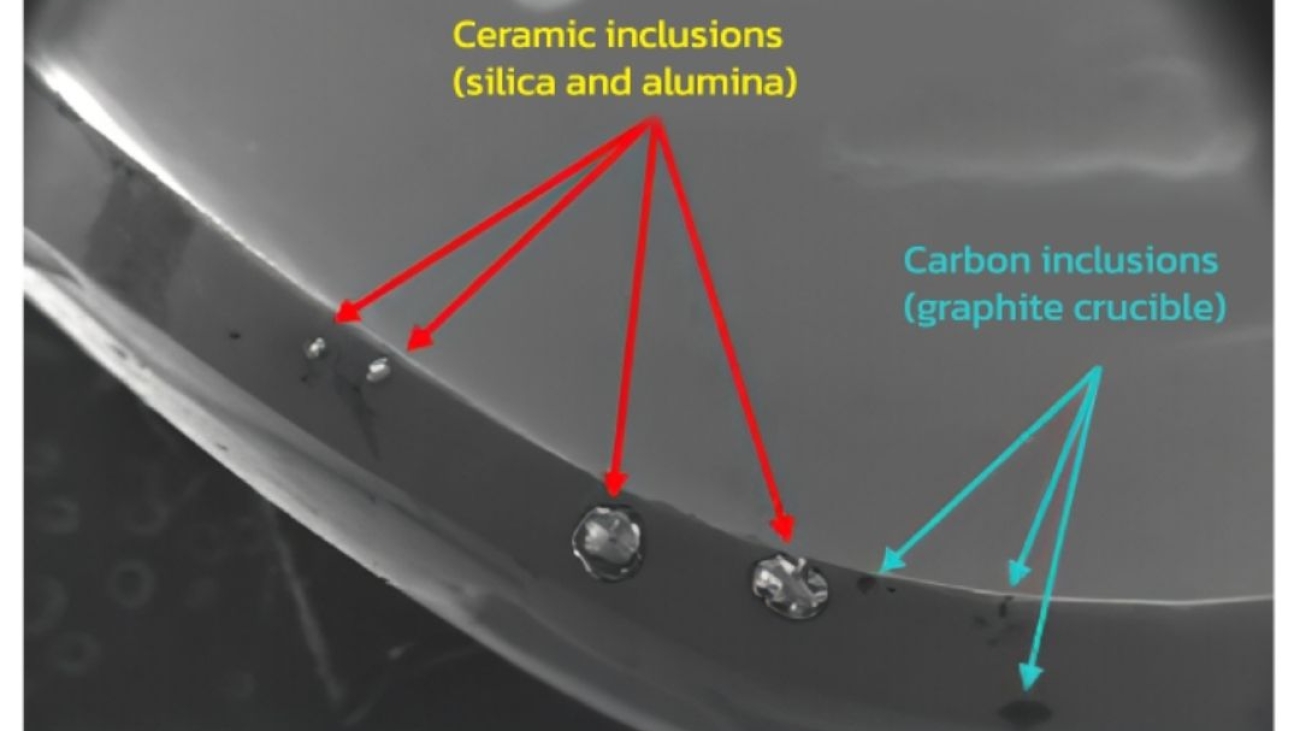
    Hard spots are made from tough materials like metals (iridium, osmium) or oxides contamination. When polishing jewelry with hard spots, the polishing brush tends to leave “comet tail” marks due to the resistance presented by the hard material.
  2. Soft Spots
    Soft spots consist of softer materials like graphite, plaster or talcum powder, which do not resist polishing. As a result, they typically do not leave comet tails during the finishing process, but can leave the caves.

Sources of Spot Contamination

  • Raw Materials: Poorly refined metals can contain contaminants such as osmium, iridium or ruthenium, which can lead to hard spots in the final product.
  • Melting Phase: Poor or faulty equipment may be the reason contaminants like oxides during the casting process.
  • Nickel Silicides: Commonly found in white gold alloys, these hard spots can form during slow cooling or poor mixing and their presence increases when recycled materials are reused.
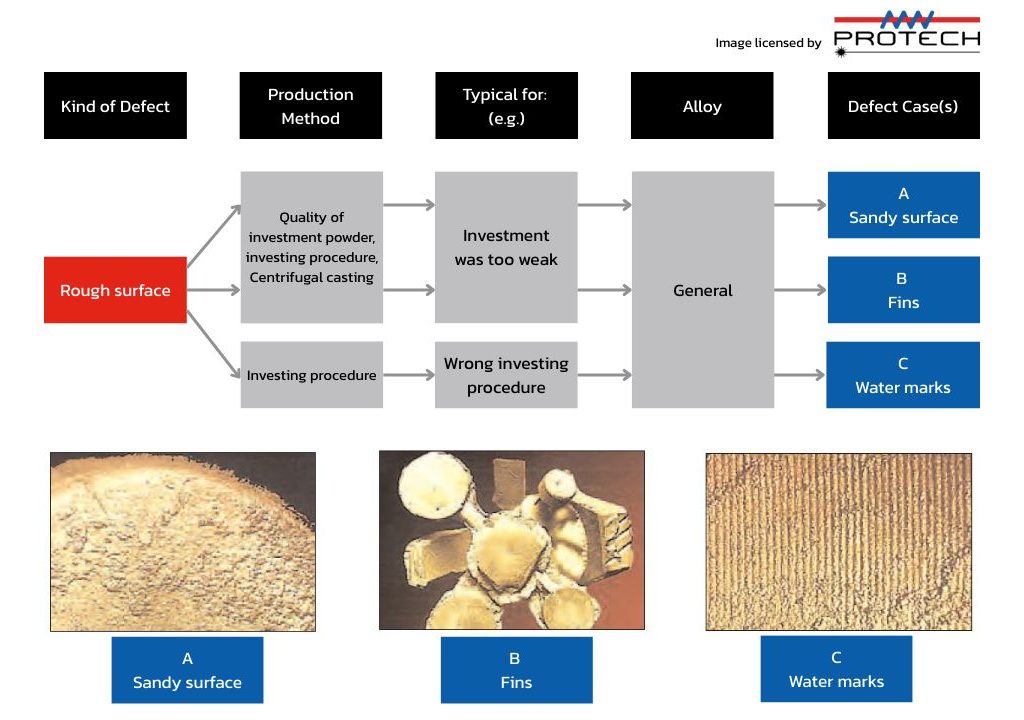
  • Finishing Phase: Materials used in sandblasting and polishing, such as alumina or silica, can get trapped in porous surfaces, resulting in spots.

How to Avoid Spots

  1. Use Properly Refined Metals
    Ensure that the metals used in jewelry production are thoroughly refined to reduce the risk of contaminants.
  2. Control Melting and Cooling Processes
    Maintain careful control during the melting and cooling phases to minimize the introduction of foreign particles.
  3. Avoid Reusing Scrap Materials
    Steer clear of reusing scrap materials that may contain contaminants, as they can lead to defects in the finished piece.
  4. Reduce Surface Porosity
    Take steps to minimize porosity in the jewelry surface, which can trap particles during the finishing process.

Conclusion

Understanding and addressing hard and soft spots in jewelry is essential for achieving high-quality results. By utilizing advanced machinery from Protech Transfer from Indutherm.de, you can enhance your production process and reduce the risk of defects, ensuring a beautiful finish for your jewelry pieces.

Diagram-illustrating-the-factors-affecting-metal-flow-in-jewelry-casting

Form Filling: Theory and Alloy Properties in Jewelry Casting

Understanding Metal Flow in Jewelry Casting

The properties of liquid metal significantly influence its behavior during the casting process. Factors such as alloy composition and interaction with investment plaster affect its flow and filling ability. Additionally, solidification characteristics, including shrinkage and grain size, play a crucial role in determining the metal structure and surface quality of the production. Protech Transfer’s advanced casting machines help optimize these processes for superior and stable repeatability results.

Factors Affecting Metal Flow

  1. Viscosity
    Viscosity refers to the thickness of a liquid. A higher viscosity means a slower flow of metal. Temperature is a key factor affecting viscosity; as the temperature rises, viscosity decreases, facilitating better metal flow during the casting process.
  2. Surface Tension
    Surface tension is the force that allows a liquid to resist external forces. It impacts the liquid’s ability to wet surfaces and fill investment flasks, which is essential for reproducing intricate details in jewelry. Utilizing the right machinery from Protech Transfer can help manage these factors effectively.

Solidification Factors

Grain refiners in alloys enhance form filling by influencing grain size during solidification. A fine grain structure leads to improved detail reproduction, while certain elements can negatively affect this process. Understanding these properties is vital for jewelers seeking high-quality outcomes.

The Role of Vibration Technology

Incorporating vibration during the casting process can significantly improve quality. Vibration helps to reduce porosity, achieve smaller grain sizes and enhance material flow. This results in fewer defects and better casting stability, ultimately leading to higher quality jewelry with minimal post-processing requirements.

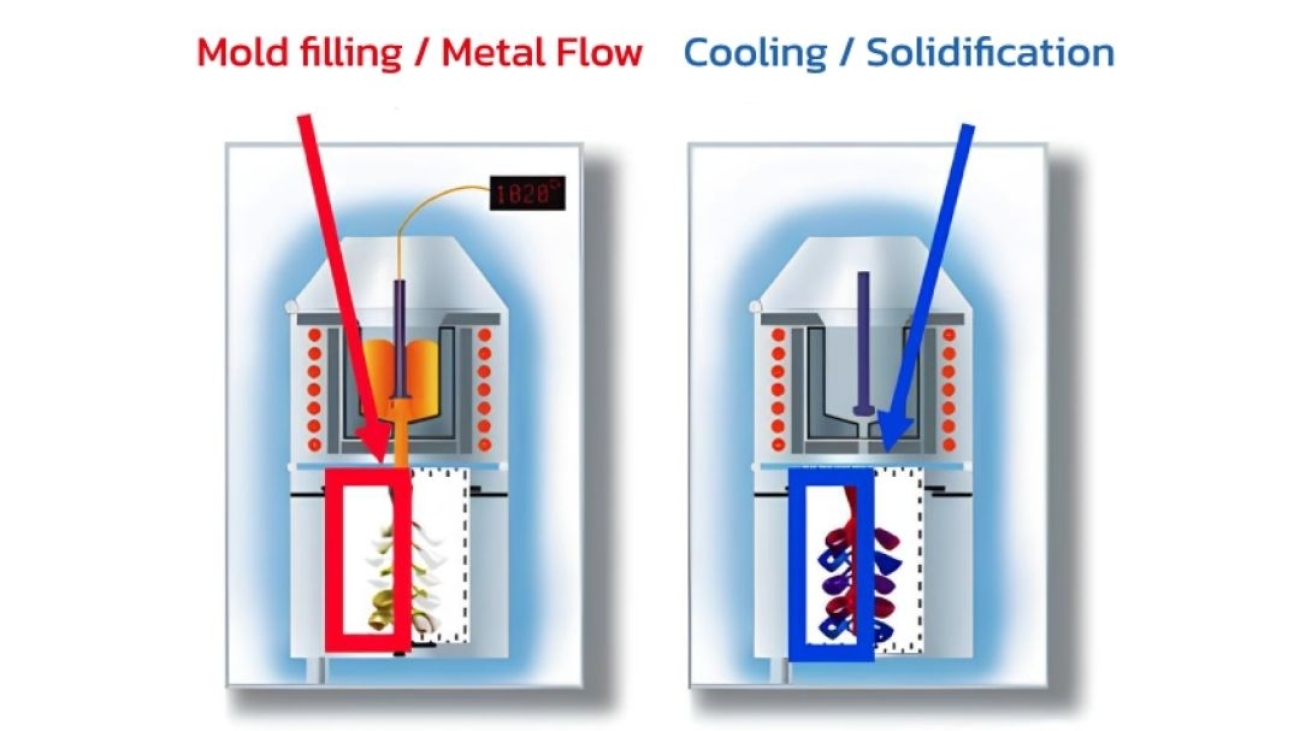
Casting from vacuum to vacuum

Indutherm casting machines implement the casting from vacuum to vacuum. The absence of air resistance significantly improves the form filling of even the thinnest and most filigree items

Conclusion

Achieving optimal form filling in jewelry making relies on careful control of alloy properties and casting parameters. By understanding factors affecting metal flow and leveraging advanced techniques that implement Indutherm.de casting machines, jewelers can produce superior pieces that meet the highest quality standards.