Why Stainless Steel Casting

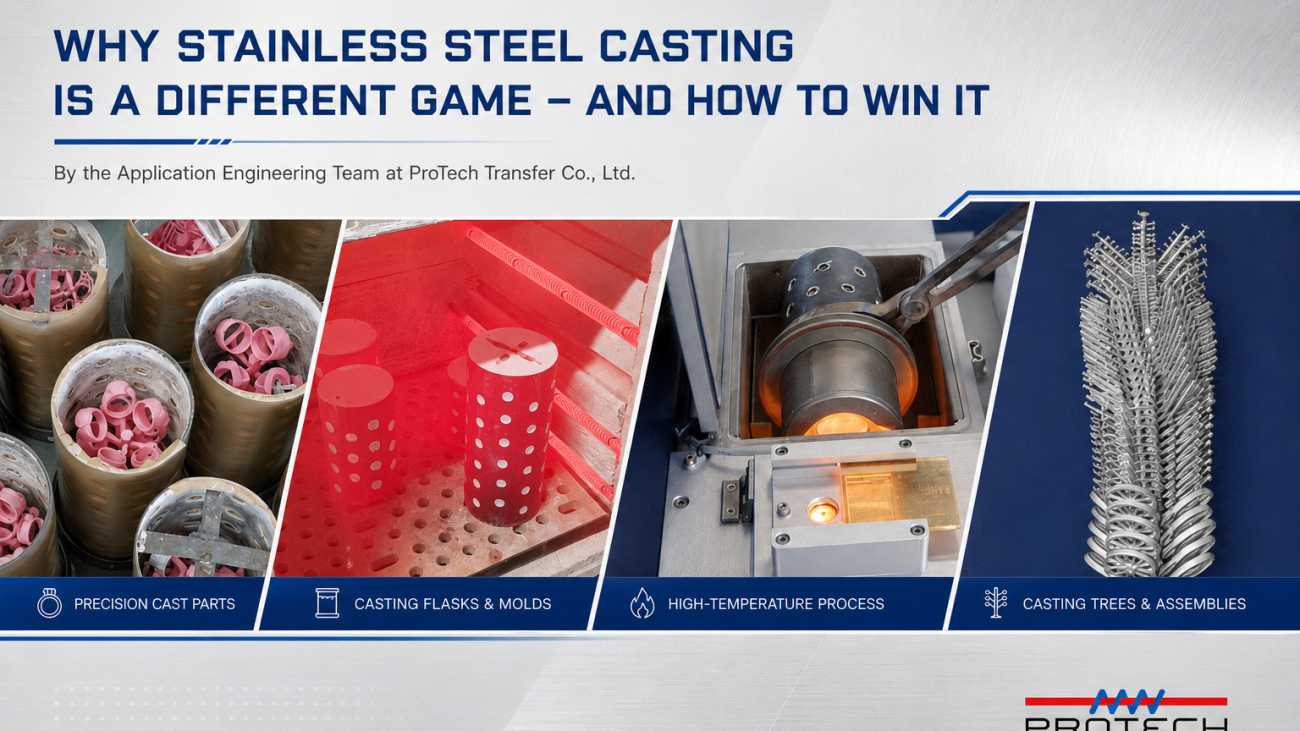
Why Stainless Steel Casting Is a Different Game. And How to Win It

By the Application Engineering Team at ProTech Transfer Co., Ltd.

Most jewelry workshops are built around Gold and Silver. The Casting machines, the habits, the intuition, all of it is tuned to precious metals that flow freely and forgive small mistakes. Then a client asks for stainless steel and suddenly the rules change completely.

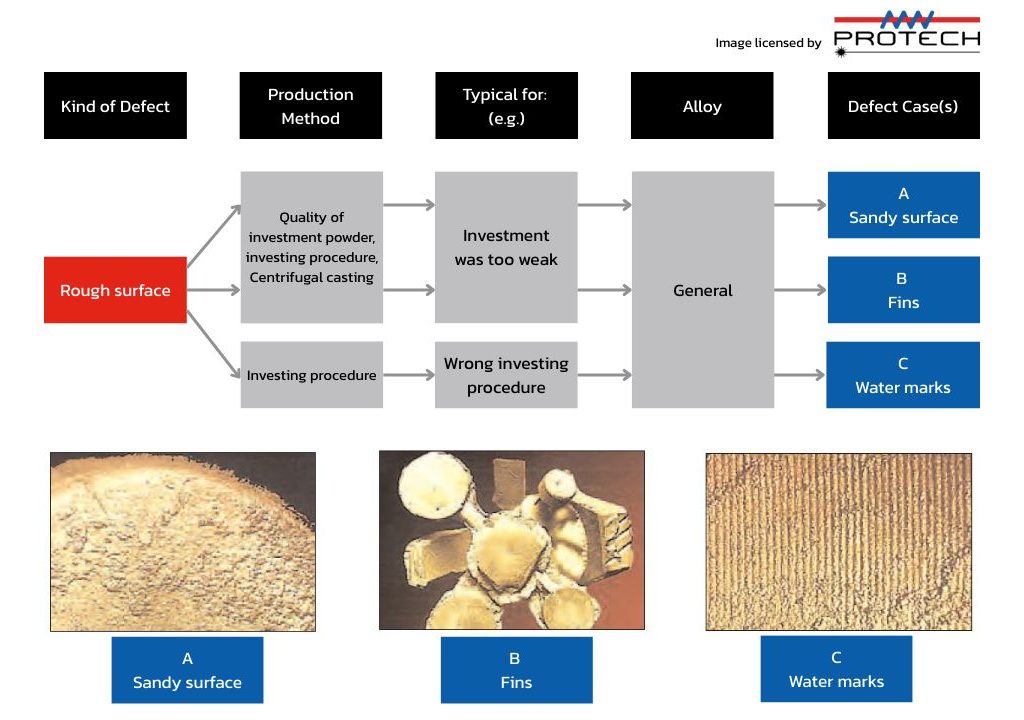
Stainless steel investment casting is one of the fastest-growing areas in the jewelry industry. Watches, clasps, rings, pendants, surgical-grade jewelry and high-wear fashion pieces are driving demand. But many workshops that try to make the jump end up with the same frustrating results: rough surfaces, incomplete fills and high reject rates. The good news is that these problems are not bad luck. They are predictable and they are fixable.

The Metal Is Not the Problem. The Process Is.

Gold melts at around 1,064°C and flows easily into a mold, while stainless steel casting requires temperatures near 1,500°C and exhibits very different metal flow behavior, moving more like a viscous fluid. This fundamental difference impacts the entire casting process, starting with a critical but often underestimated factor: wax tree design.

A sprue design and feeder system that performs well for gold and silver will fail in stainless steel casting. The metal is heavier, flows slower and solidifies faster in narrow channels. To ensure proper mold filling, sprues must be significantly larger — typically 1.2 to 1.5 times the thickness of the thickest section. Undersized sprues lead to premature solidification and incomplete casting defects, which cannot be corrected by adjusting temperature control alone.

Similarly, properly sized feeders are essential. As stainless steel undergoes approximately 4% solidification shrinkage, insufficient feeders result in internal porosity in casting, often undetectable until finishing — at which point the piece becomes scrap. Optimized feeder placement ensures continuous metal supply, improving casting quality and reducing reject rates. 

Investment Selection: The Step Most Workshops Get Wrong

If your workshop currently uses gypsum-bonded investment, the standard plaster for gold and silver, you cannot use it for stainless. 

Gypsum breaks down between 700–800°C, releasing sulphur gases directly into your mold. Those gases dissolve into the molten stainless steel and appear as gas porosity, small bubbles trapped inside the casting that weaken the piece and ruin the surface. The correct choice is phosphate-bonded investment. It remains stable well above 1,000°C, expands predictably so the mold does not crack and allows gases to escape rather than trap. Switching investment material alone eliminates one of the most common casting defects workshops experience when moving to stainless.

Temperature Control: Narrow Windows, Big Consequences

Stainless steel has a very specific pouring window: between 1,500°C and 1,550°C. Below that, the metal begins to freeze before it fills the mold, this is called a misrun and it means an incomplete casting. Above that range, surface quality degrades rapidly.

Your flask also needs to be at the right temperature when you pour — typically 850–950°C depending on section thickness. A mold that has cooled too much will cause the metal to freeze in the channels before reaching thin sections. This is one of the leading causes of incomplete mold filling in jewelry casting and it is almost always a temperature management issue rather than a machine issue.

Pouring Method Matters More Than You Think

Modern casting machines designed for difficult alloys like stainless, platinum or palladium, use a tilting pour system rather than a traditional bottom-drain crucible. When the crucible tilts, the metal is transferred horizontally rather than dropped from above. This smooth, wave-like motion keeps impurities at the surface rather than folding them into the casting and combined with vacuum-assisted filling, it pushes metal into fine details that low-fluidity alloys would otherwise leave unfilled.

The result is a dramatic reduction in casting rejects (reduce casting reject), cost reduction in casting and a surface finish consistent enough to go directly to polishing without remedial work.                             

The Takeaway

Stainless steel casting rewards process discipline and process optimization. By upsizing your sprue design and feeder system beyond what gold and silver require, switching to phosphate-bonded investment and maintaining precise temperature control, your casting defects and reject rate will decrease significantly.

The learning curve is real, but with a clear understanding of metal flow behavior, solidification shrinkage and the root causes of porosity in casting, improvement comes quickly.

For workshops aiming to expand into stainless steel casting, platinum casting or other high-temperature alloy casting, ProTech Transfer Co., Ltd. provides technical consultation and industrial casting solutions in Thailand. www.protech-transfer.comThe Takeaway
cover2

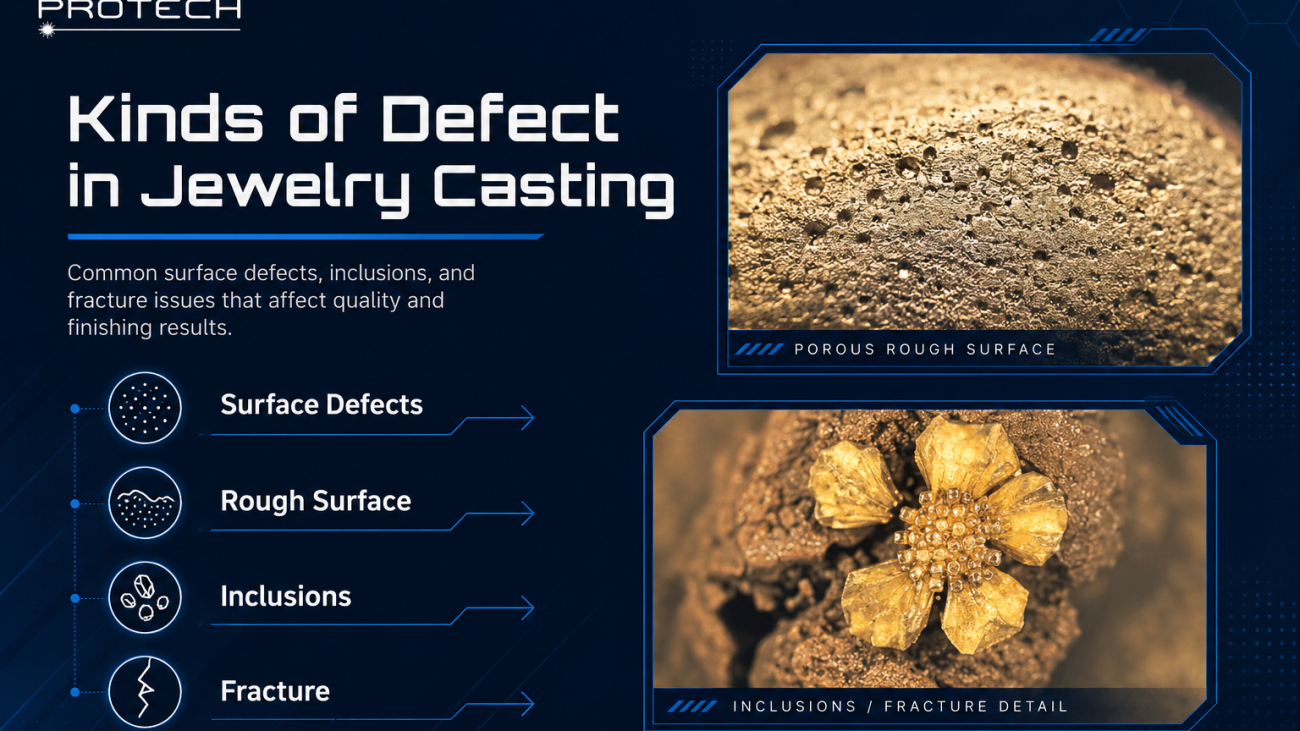
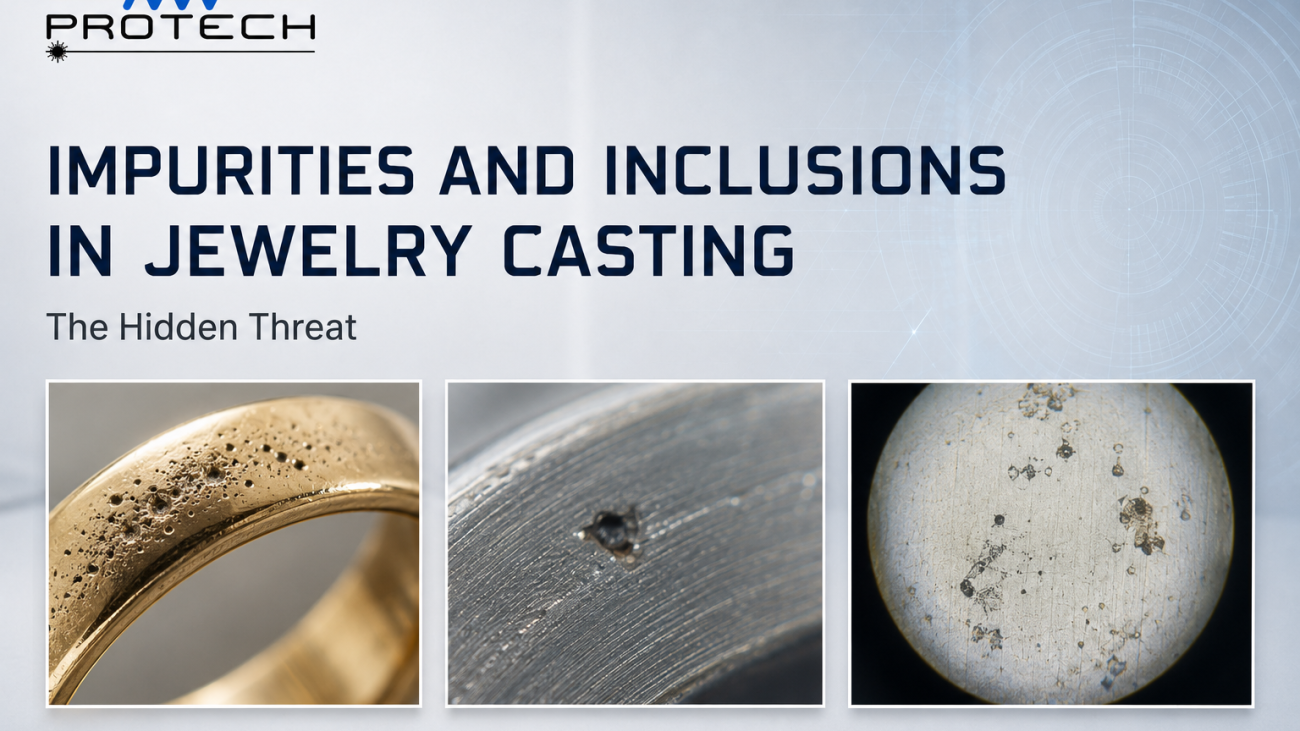
Impurities and Inclusions in Jewelry Casting – The Hidden Threat

Even trace levels of contamination can compromise the structural integrity and surface finish of cast jewelry. Understanding where these impurities originate and how to stop them is fundamental to defect-free production.

The scale of the problem

In jewelry casting, purity is not a luxury, it is a prerequisite. Metals marketed as 99.9% pure still carry up to 0.1% in residual impurities and that margin is enough to cause serious defects. Iron contamination at concentrations as low as 100–200 ppm has been shown to initiate cracking in gold alloys. Lead and sulphide inclusions can strip an alloy of nearly all its mechanical strength.

Iron contamination at just 100 ppm can initiate cracking in gold alloys.

Where contamination enters the process

Contamination has three primary entry points. The first is the raw material itself, where even certified metals carry trace elements from refining. The second and most frequently cited is scrap recycling. Inadequately cleaned returns introduce oxides, investment residues and foreign metallic particles directly into the melt. The third is the casting environment: steel tools, worn crucibles and airborne dust all contribute contamination during melting and pouring.

A taxonomy of defects

The type of defect produced depends largely on what entered the melt and when

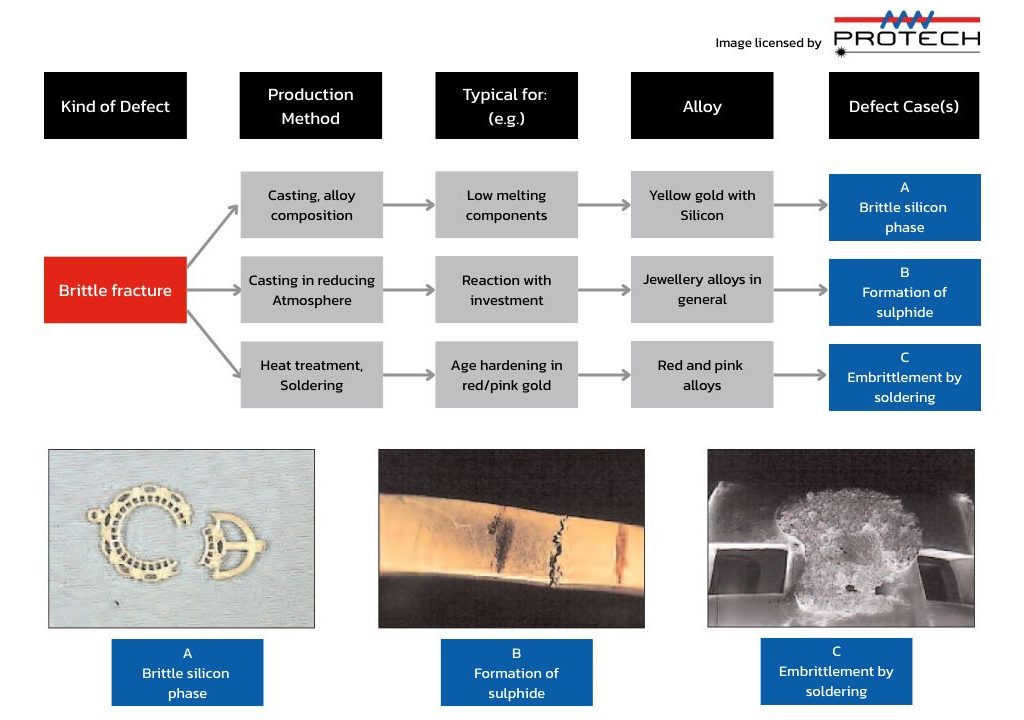
Cracks & brittleness

Iron, lead or sulphide inclusions reducing alloy ductility and strength

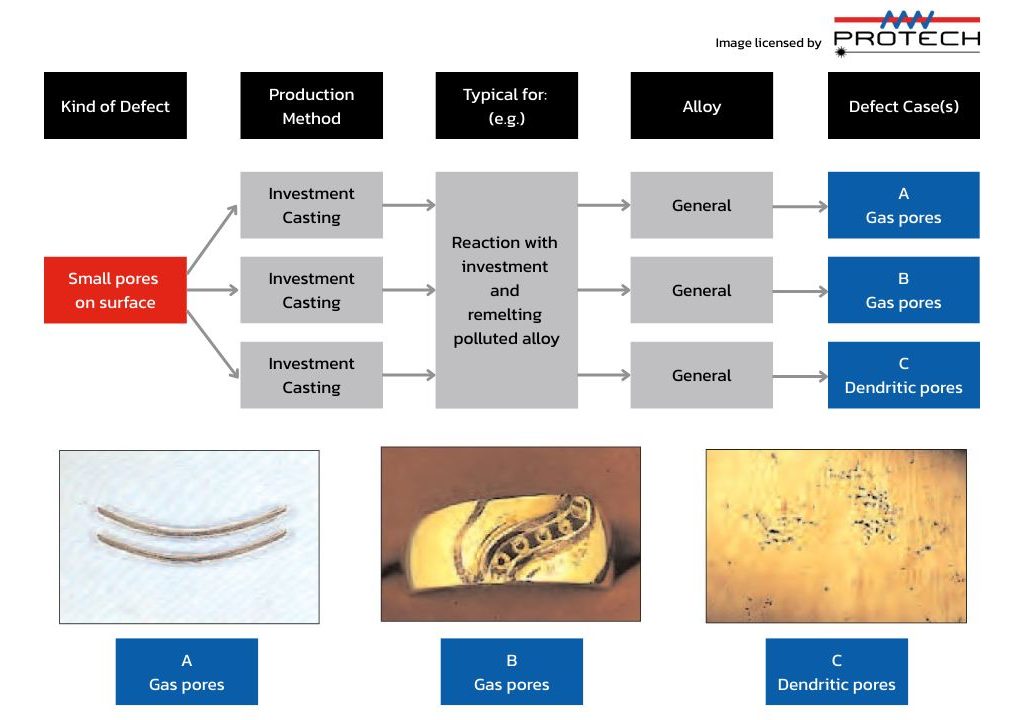
Surface porosity

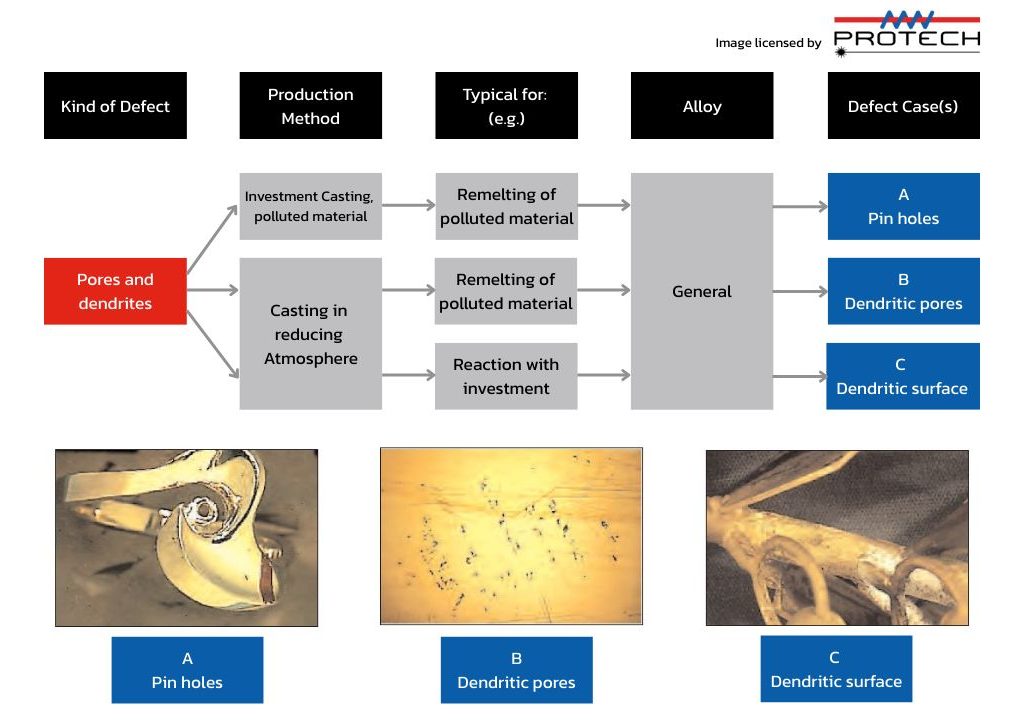
Investment particles or slag entering the melt; visible after polishing as scattered pores

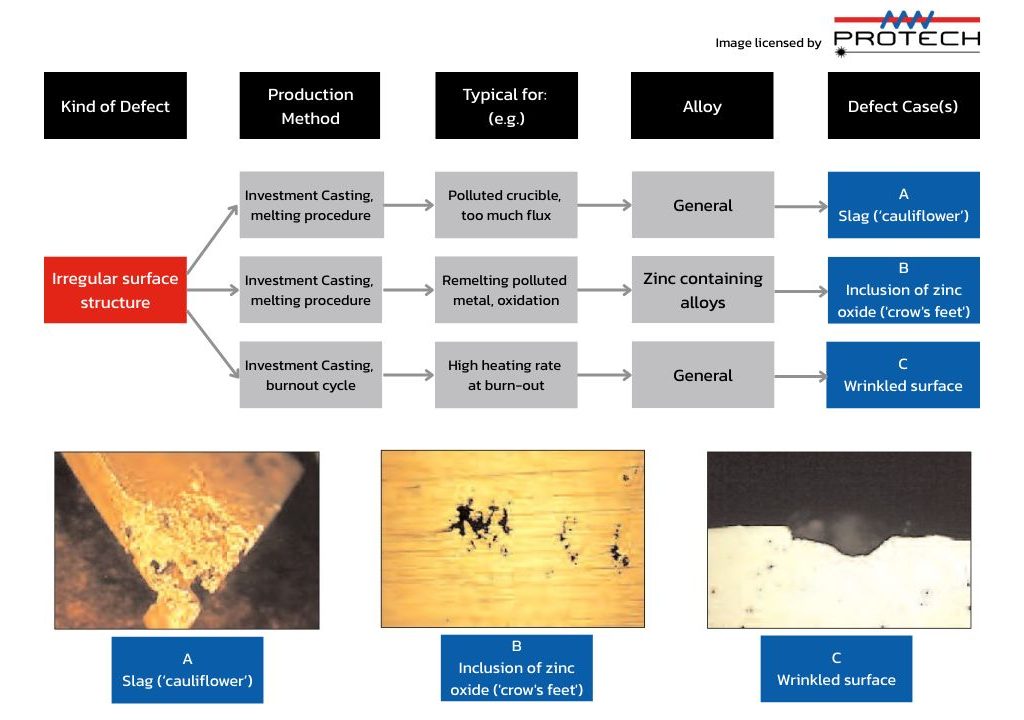
Oxide inclusions

Zinc oxide producing “crow’s foot” porosity is difficult to remove once formed

Slag inclusions

Excess or contaminated flux creating rough, cauliflower-textured surfaces

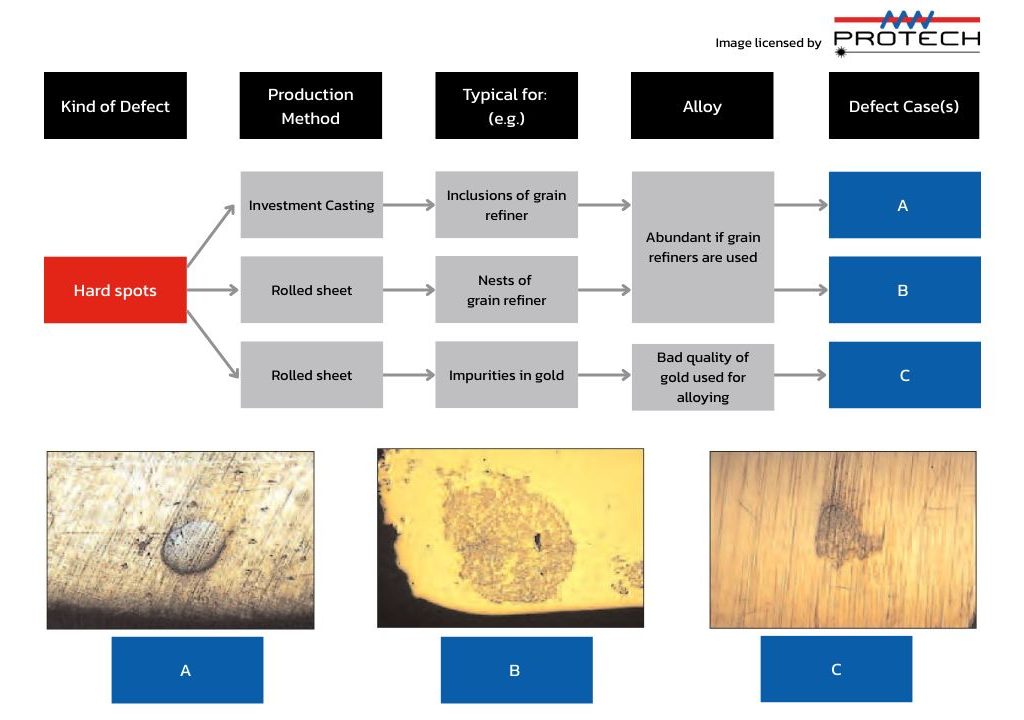
Hard spots

Undissolved grain refiners such as iridium forming particles that resist polishing and cause cracking

Prevention

Control must be applied at every stage of the process, not treated as a final quality check.

  • Source high-quality, certified raw materials and verify composition
  • Keep scrap clean; limit the proportion of recycled content per melt
  • Use dedicated, clean crucibles and replace them before wear introduces contamination
  • Minimise flux additions and eliminate contaminated stock
  • Maintain proper investment mixing, storage and burnout procedures
  • Melt under a protective atmosphere where possible to suppress oxide formation

Conclusion

Impurity control is not a peripheral concern, it sits at the core of casting quality. The consequences of contamination are disproportionate to the quantities involved: a part-per-million problem can become a visible, structural or commercial failure. A disciplined approach to materials selection, scrap management and process hygiene remains the most reliable path to consistent, defect-free output.

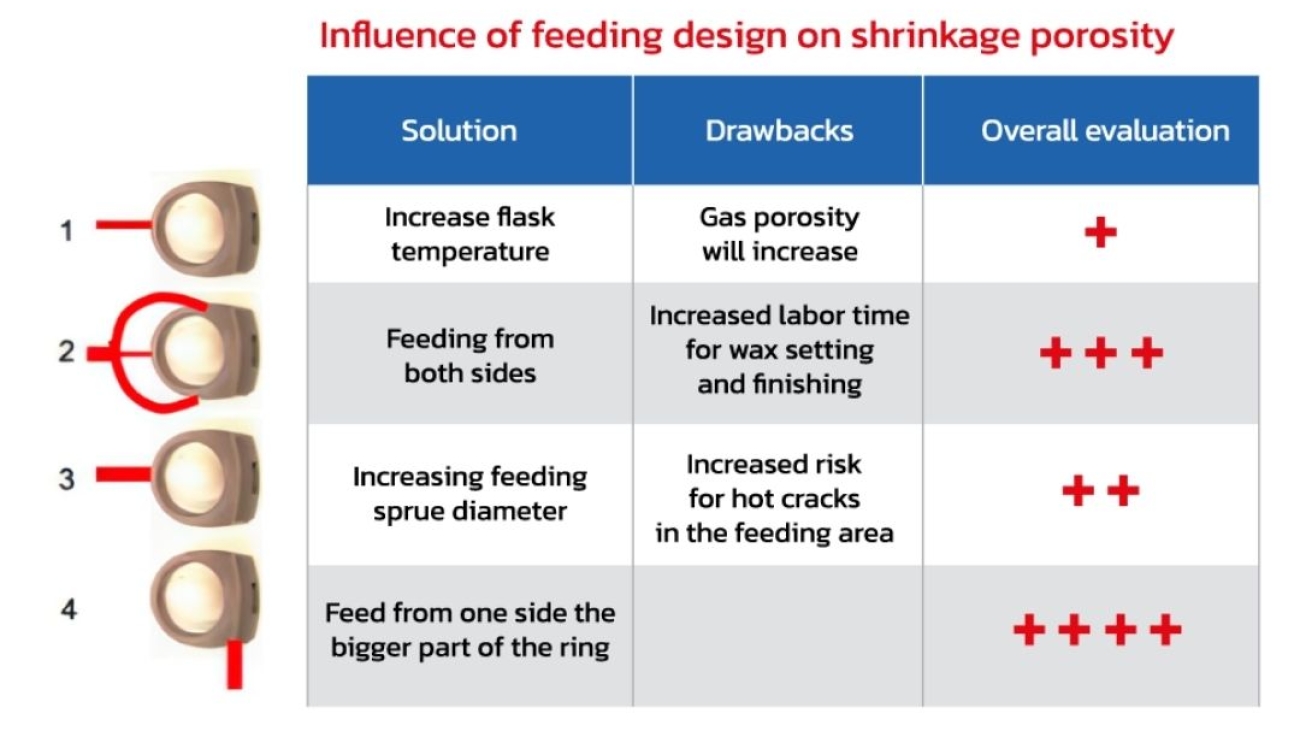
Diagram-showing-the-influence-of-feeding-design-on-shrinkage-porosity

Shrinkage Porosity in Jewelry Casting

What is Shrinkage Porosity?

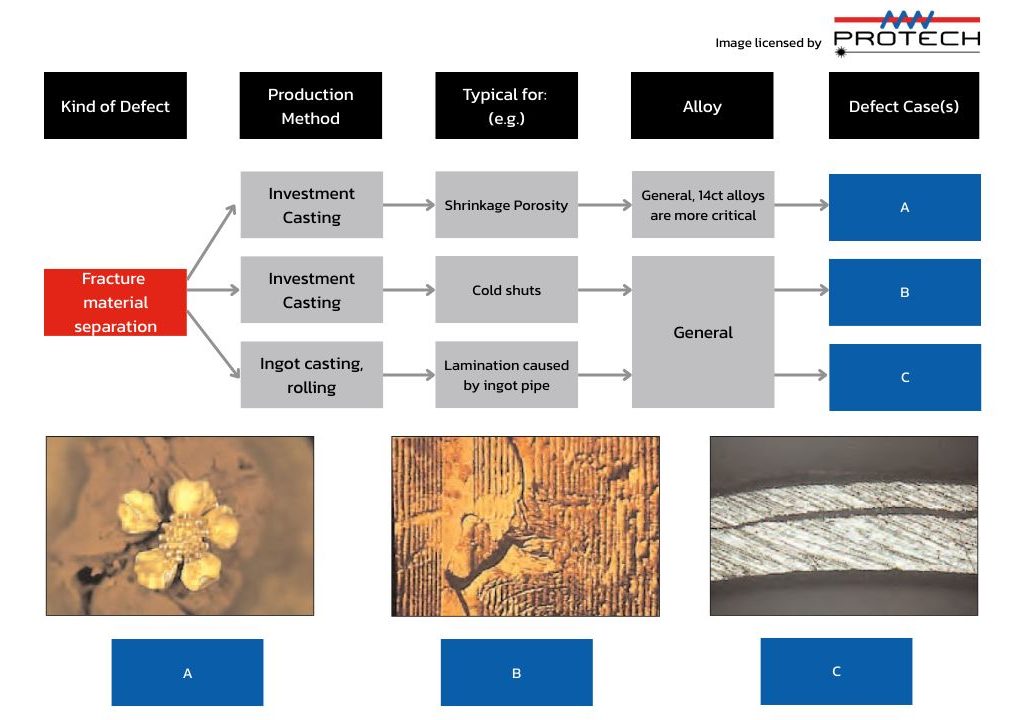
Shrinkage porosity refers to irregular cavities formed in metal as it shrinks while solidifying, that is a common occurrence in jewelry casting. This shrinkage results from a sudden reduction in volume as metals transform from a liquid to a solid state. In different alloys, this shrinkage can range from 4-6% for metals like gold and silver. If not effectively managed, shrinkage porosity leads to visible defects in cast items, like irregular holes and caves.

Formation and Appearance

During the solidification process, metal dendrites (branch-like crystals) develop and liquid metal must flow between these branches to compensate for the shrinkage. When this “feeding” process fails, it results in porosity. Certain metals, such as white gold, are more susceptible to shrinkage porosity compared to others like yellow gold or sterling silver. Protech Transfer’s advanced casting machines can help optimize the feeding process to reduce these risks. Special attention should also be paid to the correct location and size of the sprues and feeders.

Prevention Methods

  1. Effective Feed-Sprue Systems
    Designing effective feed-sprue systems is essential. Feed-sprues is a reservoir of liquid metal that fills the voids created by shrinkage. Proper positioning of the sprue is crucial; it should be attached to the heaviest section of the jewelry piece.
  2. Control of Flask and Casting Temperatures
    Flask and casting temperatures significantly influence shrinkage. Higher flask temperatures can be beneficial, but they must be carefully managed to avoid introducing other defects, such as gas porosity.

Conclusion

To avoid shrinkage porosity, effective sprue design and temperature control are vital, especially for alloys with lower thermal conductivity, like white gold. Utilizing Protech Transfer’s machinery from Indutherm.de can enhance your casting process, reducing the likelihood of defects and improving the overall quality of your jewelry.

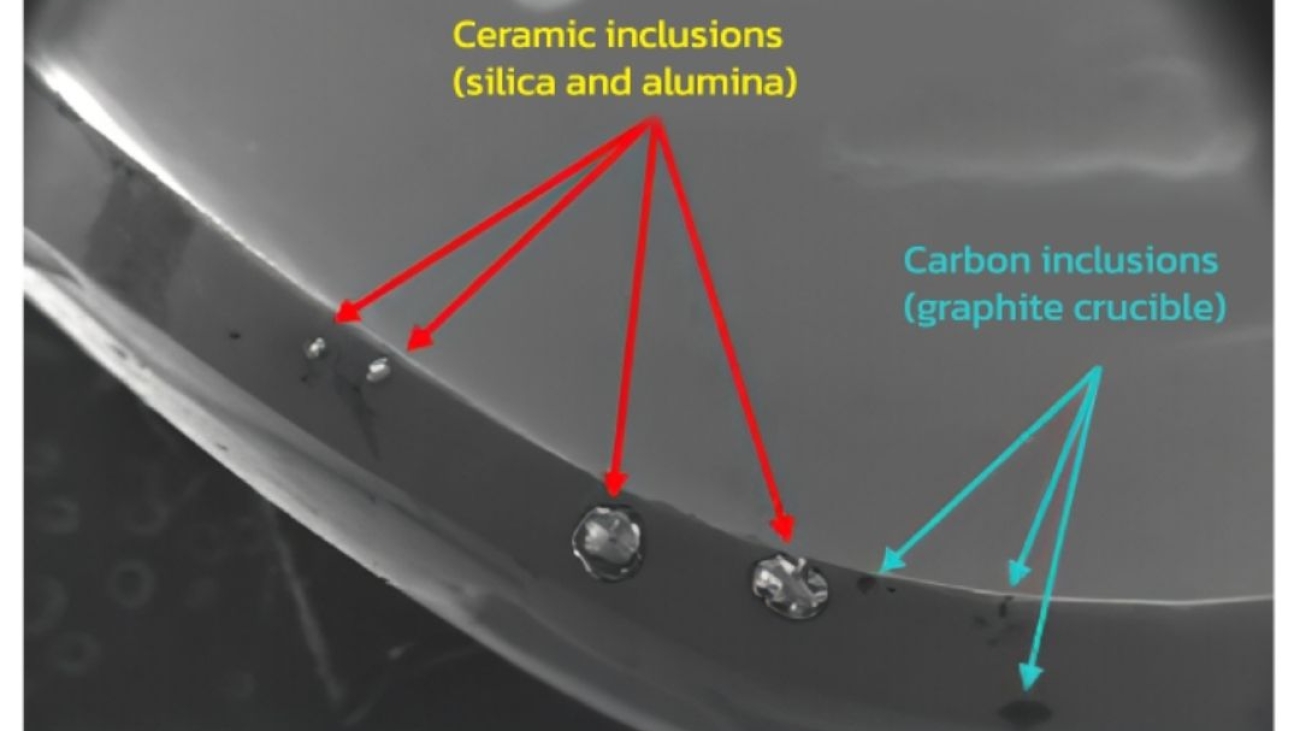
Image-of-ceramic-inclusions-silica-and-alumina-found-in-jewelry

Hard and Soft Spots in Jewelry

Understanding Jewelry Spots

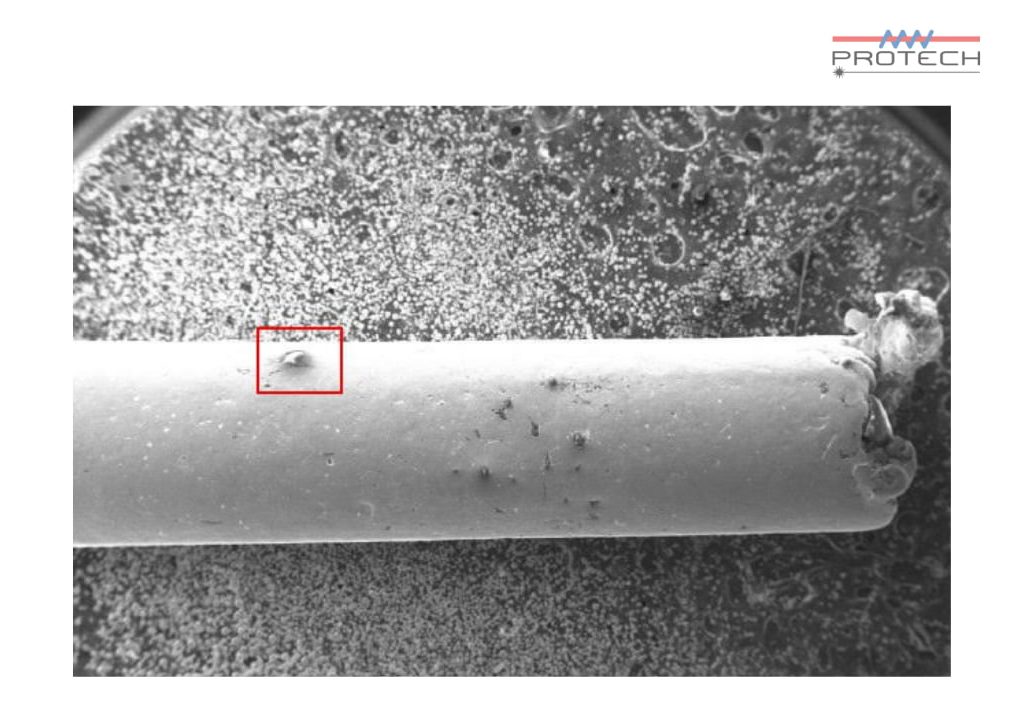
Spots in jewelry are foreign particles that become embedded in the surface of a piece, resulting in visible defects. These spots consist of materials that differ from the jewelry itself and can often be seen with the naked eye. Identifying these spots early is crucial for maintaining high-quality standards in jewelry production.

Types of Spots

  1. Hard Spots
    Hard spots are made from tough materials like metals (iridium, osmium) or oxides contamination. When polishing jewelry with hard spots, the polishing brush tends to leave “comet tail” marks due to the resistance presented by the hard material.
  2. Soft Spots
    Soft spots consist of softer materials like graphite, plaster or talcum powder, which do not resist polishing. As a result, they typically do not leave comet tails during the finishing process, but can leave the caves.

Sources of Spot Contamination

  • Raw Materials: Poorly refined metals can contain contaminants such as osmium, iridium or ruthenium, which can lead to hard spots in the final product.
  • Melting Phase: Poor or faulty equipment may be the reason contaminants like oxides during the casting process.
  • Nickel Silicides: Commonly found in white gold alloys, these hard spots can form during slow cooling or poor mixing and their presence increases when recycled materials are reused.
  • Finishing Phase: Materials used in sandblasting and polishing, such as alumina or silica, can get trapped in porous surfaces, resulting in spots.

How to Avoid Spots

  1. Use Properly Refined Metals
    Ensure that the metals used in jewelry production are thoroughly refined to reduce the risk of contaminants.
  2. Control Melting and Cooling Processes
    Maintain careful control during the melting and cooling phases to minimize the introduction of foreign particles.
  3. Avoid Reusing Scrap Materials
    Steer clear of reusing scrap materials that may contain contaminants, as they can lead to defects in the finished piece.
  4. Reduce Surface Porosity
    Take steps to minimize porosity in the jewelry surface, which can trap particles during the finishing process.

Conclusion

Understanding and addressing hard and soft spots in jewelry is essential for achieving high-quality results. By utilizing advanced machinery from Protech Transfer from Indutherm.de, you can enhance your production process and reduce the risk of defects, ensuring a beautiful finish for your jewelry pieces.

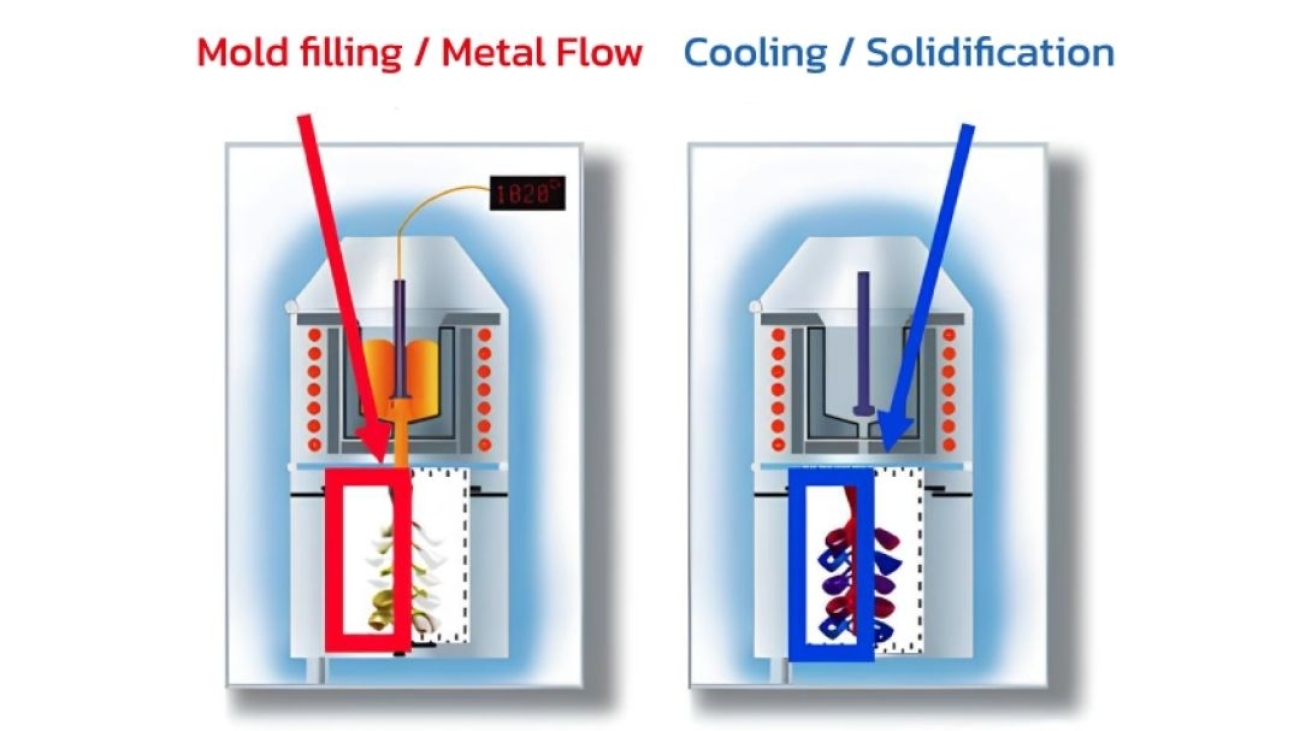
Diagram-illustrating-the-factors-affecting-metal-flow-in-jewelry-casting

Form Filling: Theory and Alloy Properties in Jewelry Casting

Understanding Metal Flow in Jewelry Casting

The properties of liquid metal significantly influence its behavior during the casting process. Factors such as alloy composition and interaction with investment plaster affect its flow and filling ability. Additionally, solidification characteristics, including shrinkage and grain size, play a crucial role in determining the metal structure and surface quality of the production. Protech Transfer’s advanced casting machines help optimize these processes for superior and stable repeatability results.

Factors Affecting Metal Flow

  1. Viscosity
    Viscosity refers to the thickness of a liquid. A higher viscosity means a slower flow of metal. Temperature is a key factor affecting viscosity; as the temperature rises, viscosity decreases, facilitating better metal flow during the casting process.
  2. Surface Tension
    Surface tension is the force that allows a liquid to resist external forces. It impacts the liquid’s ability to wet surfaces and fill investment flasks, which is essential for reproducing intricate details in jewelry. Utilizing the right machinery from Protech Transfer can help manage these factors effectively.

Solidification Factors

Grain refiners in alloys enhance form filling by influencing grain size during solidification. A fine grain structure leads to improved detail reproduction, while certain elements can negatively affect this process. Understanding these properties is vital for jewelers seeking high-quality outcomes.

The Role of Vibration Technology

Incorporating vibration during the casting process can significantly improve quality. Vibration helps to reduce porosity, achieve smaller grain sizes and enhance material flow. This results in fewer defects and better casting stability, ultimately leading to higher quality jewelry with minimal post-processing requirements.

Casting from vacuum to vacuum

Indutherm casting machines implement the casting from vacuum to vacuum. The absence of air resistance significantly improves the form filling of even the thinnest and most filigree items

Conclusion

Achieving optimal form filling in jewelry making relies on careful control of alloy properties and casting parameters. By understanding factors affecting metal flow and leveraging advanced techniques that implement Indutherm.de casting machines, jewelers can produce superior pieces that meet the highest quality standards.

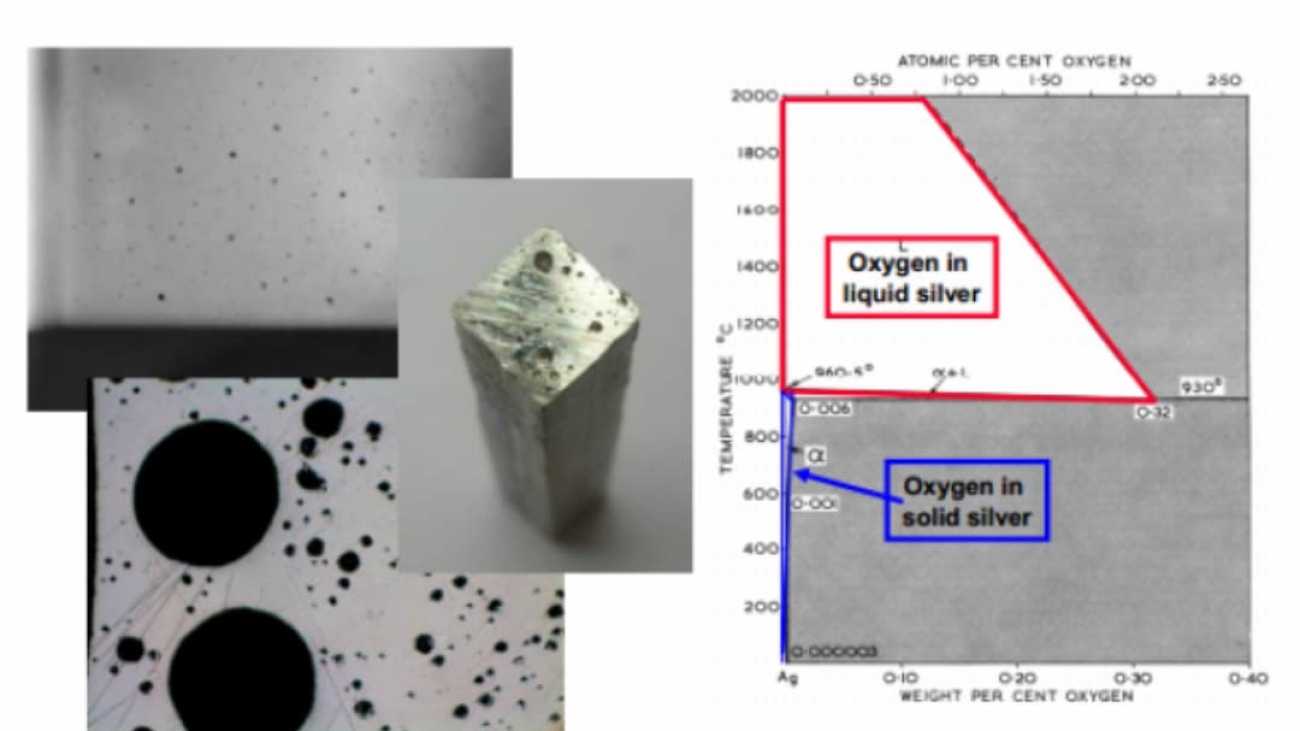
Gas_Porosity

Gas Porosity in Jewelry Castingpost

What is Gas Porosity?

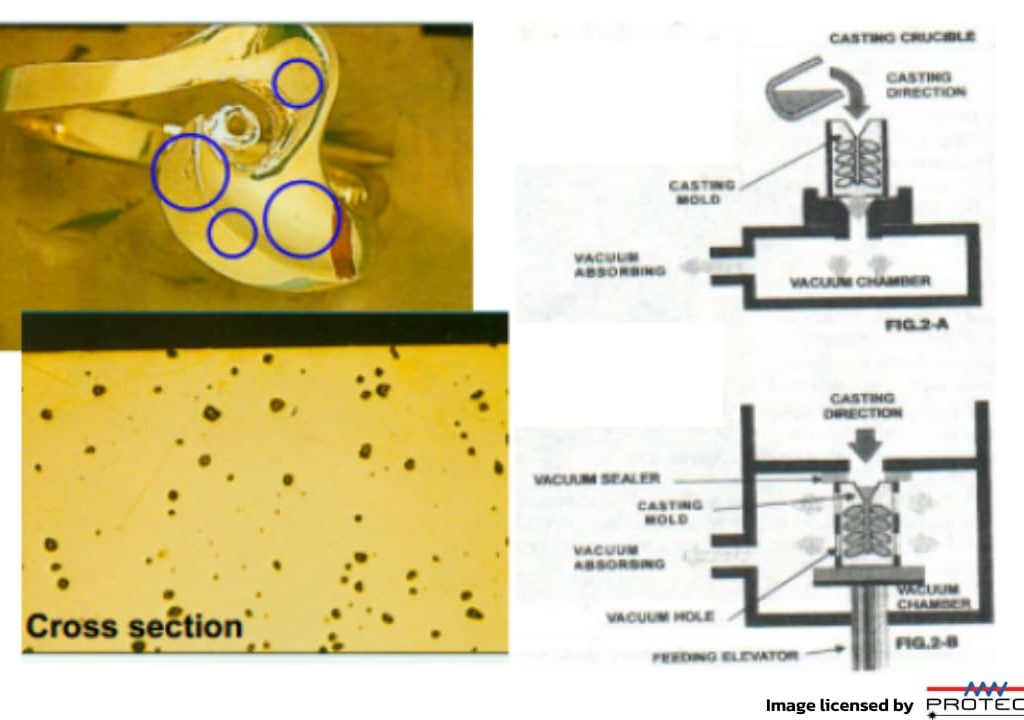
Gas porosity manifests as small, round holes under the surface of cast metal. These holes are typically smooth and uniform, contrasting with shrinkage porosity, which tends to have irregular shapes. Occasionally, the two types of porosity can overlap, making identification challenging.

How Does Gas Porosity Occur?

Gas porosity arises when gas becomes trapped in the metal during solidification. This phenomenon occurs because molten metal can retain more gas than its solidified counterpart. If the molten metal contains excessive gas, it may become entrapped while solidifying, resulting in holes once the casting cools. Protech Transfer’s high-quality casting machines from Indutherm.de can help mitigate these issues by optimizing the metal pouring process.

Causes of Gas Porosity

  1. Low-Quality Metal
    Contaminated or oxidized scrap metal is a primary contributor to gas porosity. Ensuring the use of high-quality materials is essential for preventing defects.
  2. Reaction with Investment Material
    The decomposition of investment material during contact with hot molten metal can release gas that comes into the liquid metal leading to porosity.
  3. Poor Casting Conditions
    Melting or cooling metal in open systems can introduce gasses into the metal, exacerbating porosity issues.

Solutions to Minimize Gas Porosity

  • Use High-Quality, Clean Metal
    Pure high quality metals minimize the risk of contamination.
  • Properly Degas the Metal During Melting
    Effective degassing techniques, implemented in Indutherm casting machines, help remove unwanted gasses from the molten metal.
  • Utilize Quality Investment powders
    Choosing reliable investment materials reduces the possibility of gas release during the casting process.
  • Avoid Open Systems for Melting and casting
    Utilizing protective gas or vacuum systems during casting prevent metals from gas contamination

Conclusion

Addressing gas porosity while casting is crucial for producing high-quality jewelry items. By understanding the causes and implementing effective solutions, jewelers can enhance their production processes and reduce defects. Using advanced casting machines from Protech Transfer can greatly improve the quality of your jewelry.